Gear article
Behringer Neutron
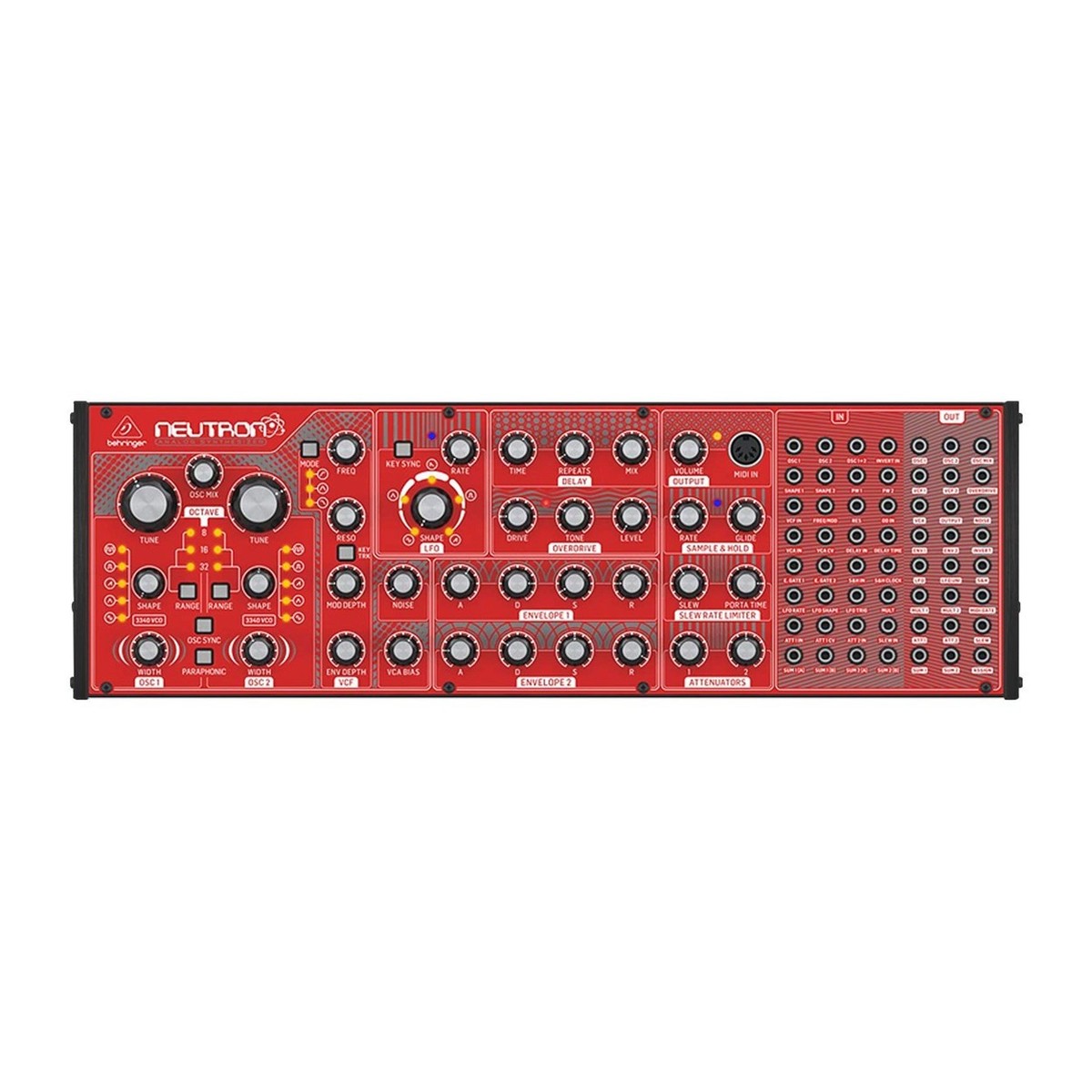
The Behringer Neutron is a paraphonic semi-modular analog synthesizer featuring a pure analog signal path and a versatile 56-point patch bay. It combines dual oscillators with waveform blending and an integrated overdrive circuit to offer extensive sound design capabilities in a compact desktop format.
Overview
The Behringer Neutron is designed to provide a comprehensive analog synthesis experience at an accessible price point. As a semi-modular instrument, it features a pre-wired internal signal path that allows users to generate sounds immediately without the need for patch cables. However, its expansive patch bay allows for the overriding of these defaults, enabling complex modulation and integration with other Eurorack-compatible equipment.
Oscillators and Sound Generation
At the heart of the Neutron are two voltage-controlled oscillators (VCOs). These oscillators provide five selectable waveforms: sine, triangle, sawtooth, square, and pulse. A unique feature of the Neutron is the ability to blend continuously between these shapes. Additionally, the unit includes individual pulse width and tone modulation controls, a noise generator, and a paraphonic mode which allows the two oscillators to be played independently.
Filtering and Modulation
The synth is equipped with a multi-mode 'Moffatt' filter (LPF, BPF, HPF) and two ADSR envelope generators for shaping the volume and filter cut-off. For movement, it includes a flexible Low Frequency Oscillator (LFO) with five shapes and MIDI sync capabilities. The signal path also features an analog overdrive circuit, which can add subtle warmth or aggressive distortion to the output.
Connectivity and Integration
The 56-point patch matrix located on the right side of the front panel is a standout feature, offering 32 inputs and 24 outputs. This allows for deep internal routing or connection to external gear like the Future Sound Systems Cric or the modul Modular Complete Studio System. It also includes MIDI In and Thru ports for integration with keyboard controllers or DAWs.
Applications
The Neutron is well-suited for a variety of users, from beginners looking to learn subtractive synthesis to experienced sound designers seeking a flexible analog voice. Its ability to create classic analog leads, bass lines, and evolving textures makes it a versatile tool for studio production.
Related gear
- £374.00 ($475)
Roland
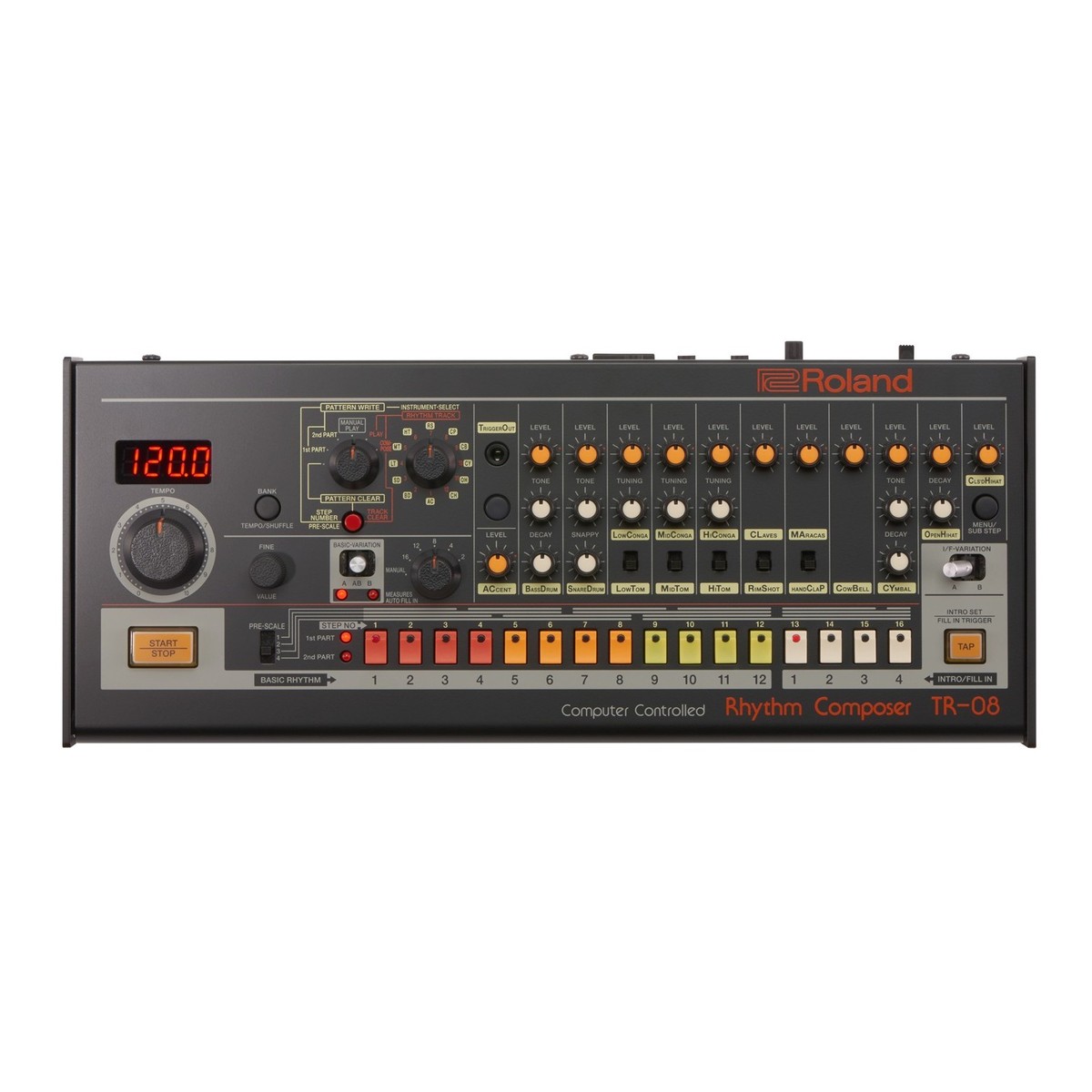
Roland Boutique TR-08 Rhythm Composer Drum Machine
 £3,699.99 ($4,699)
Oberheim
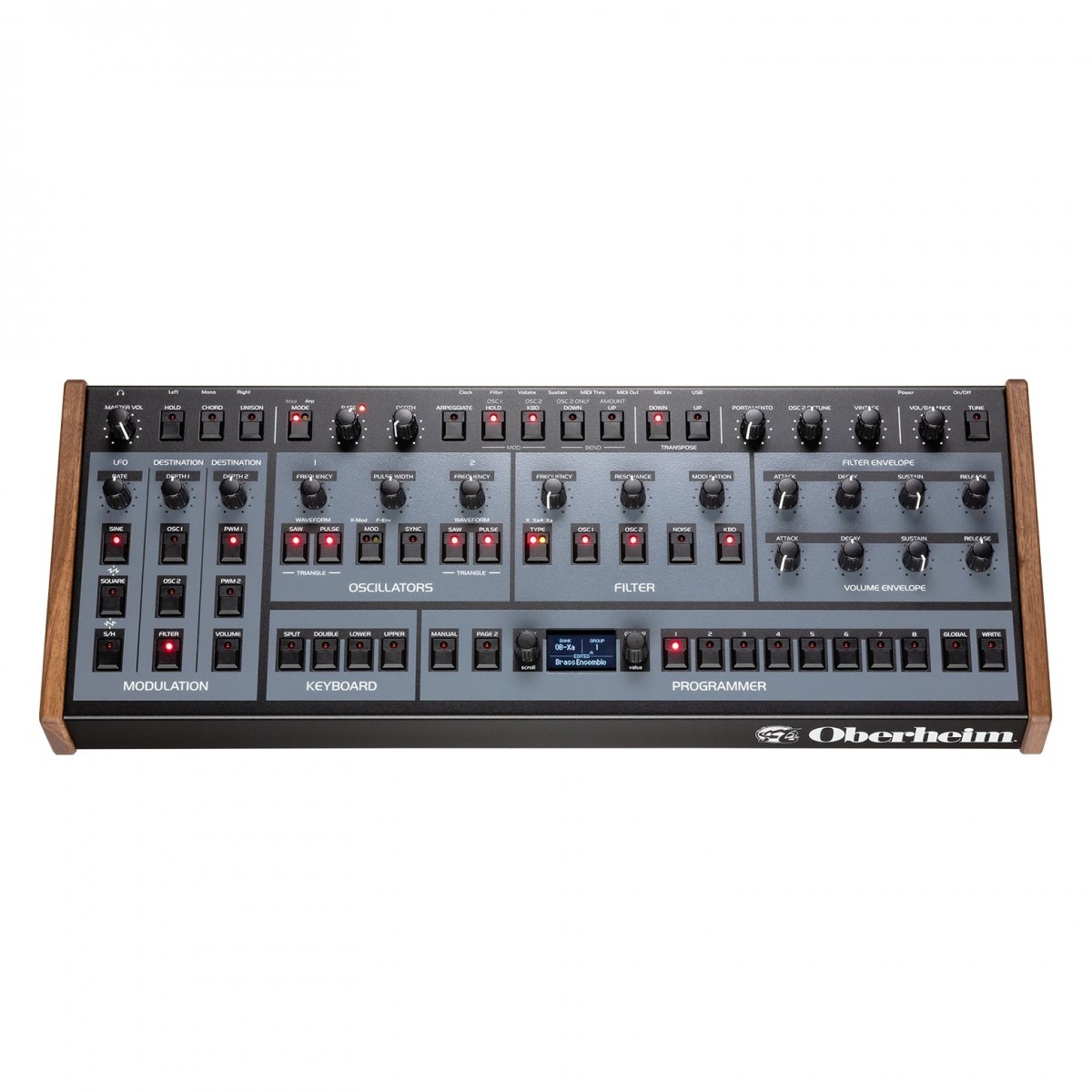
Oberheim OB-X8 Analog Synthesizer Desktop Module
 £527.01 ($669)
Yamaha
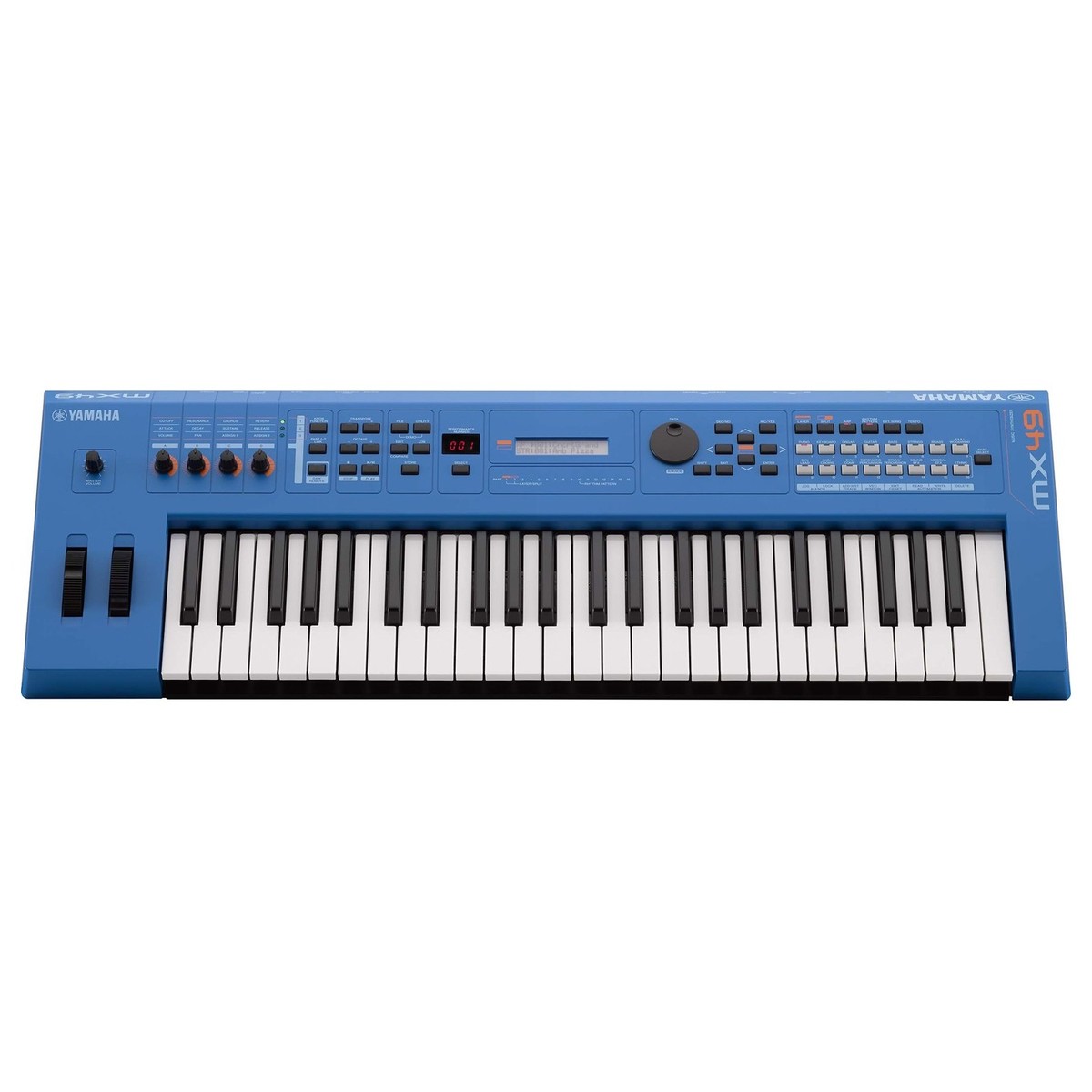
Yamaha MX49 II Music Production Synthesizer Blue
 £125.00 ($159)
Electro Harmonix
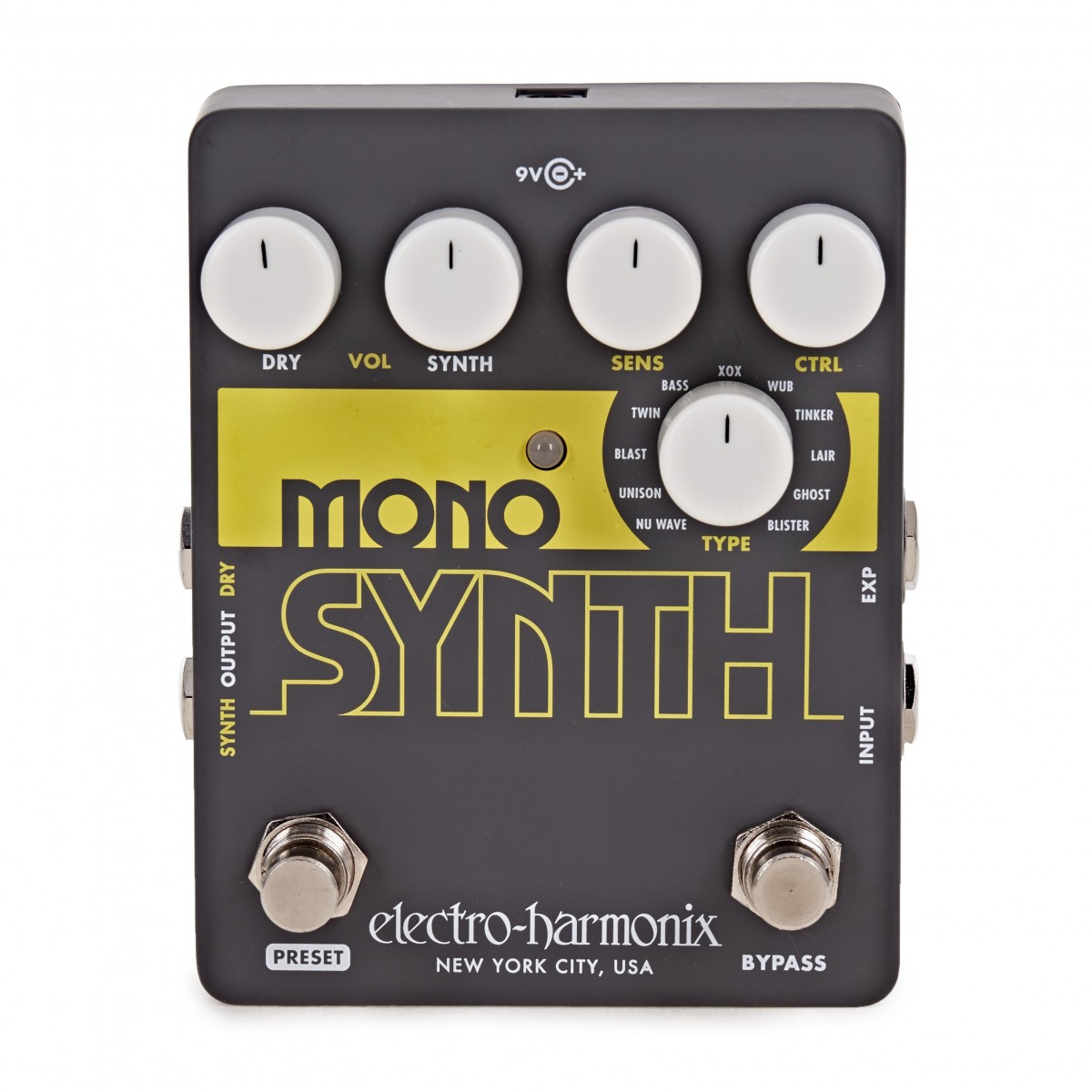
Electro Harmonix Mono Synth Guitar Synthesizer
 £2,247.69 ($2,855)
Viscount Organs
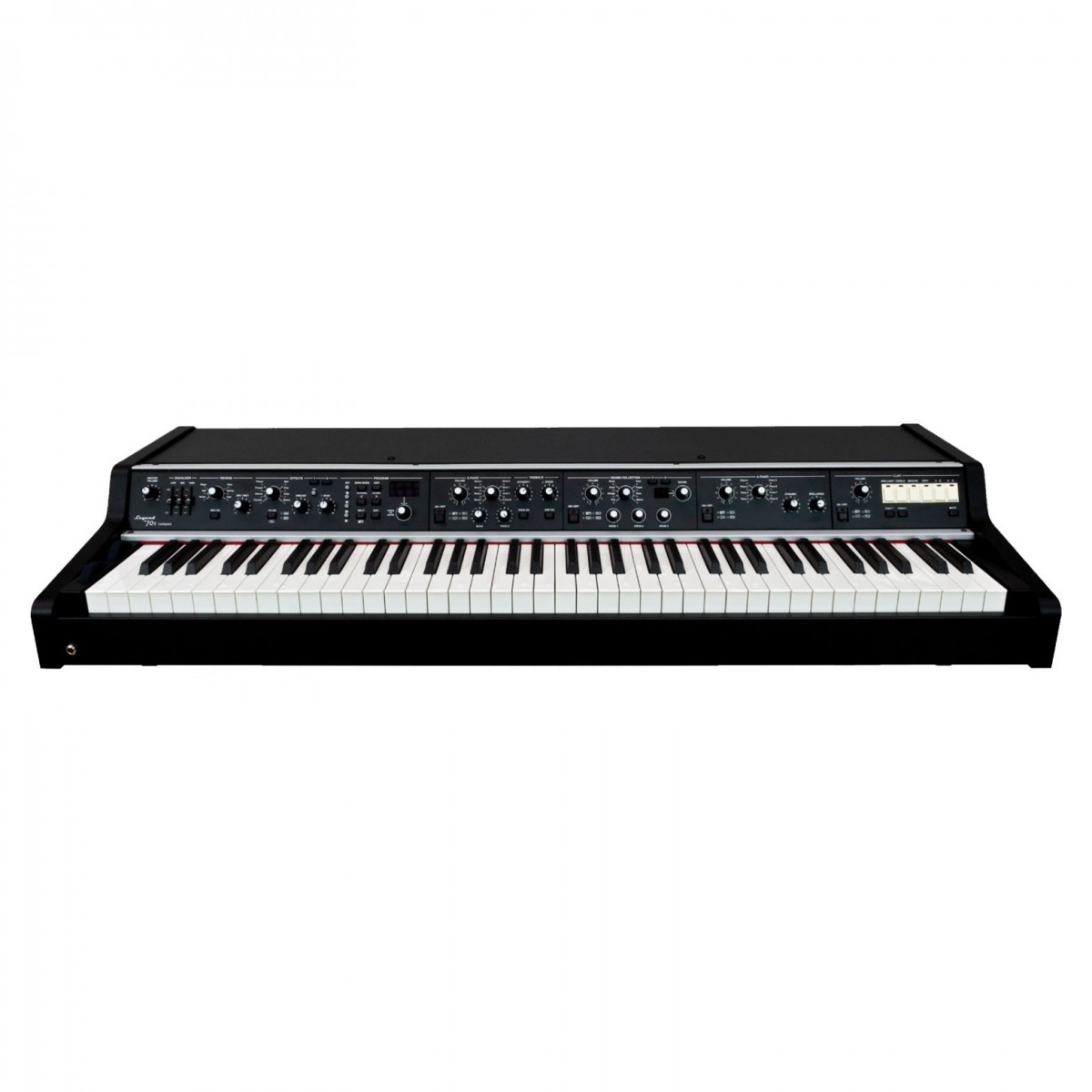
Viscount Legend 70s Compact EX Modular Stage Piano
 £645.81 ($820)
Yamaha
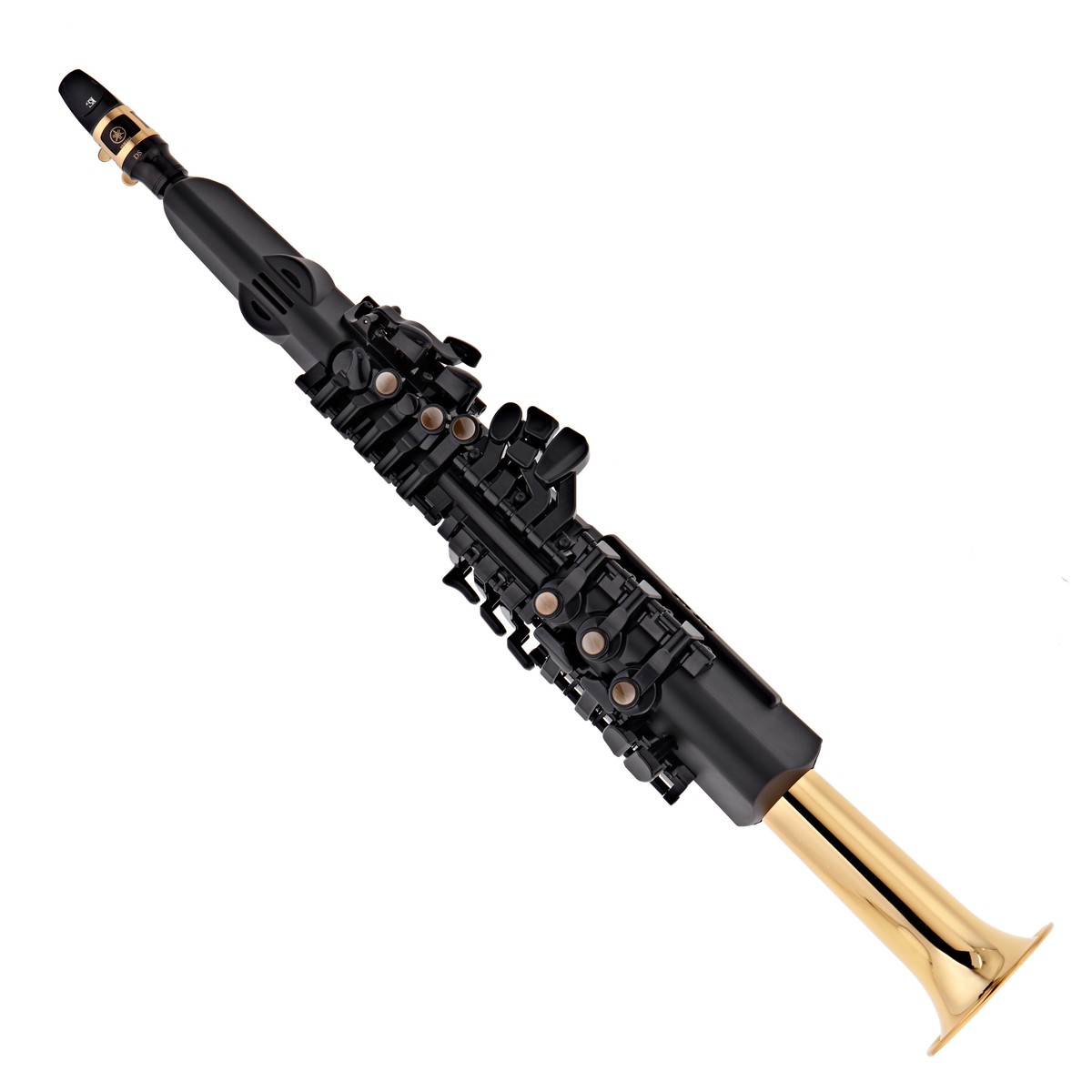
Yamaha YDS 150 Digital Wind Synthesizer
 £499.99 ($635)
Gear4Music
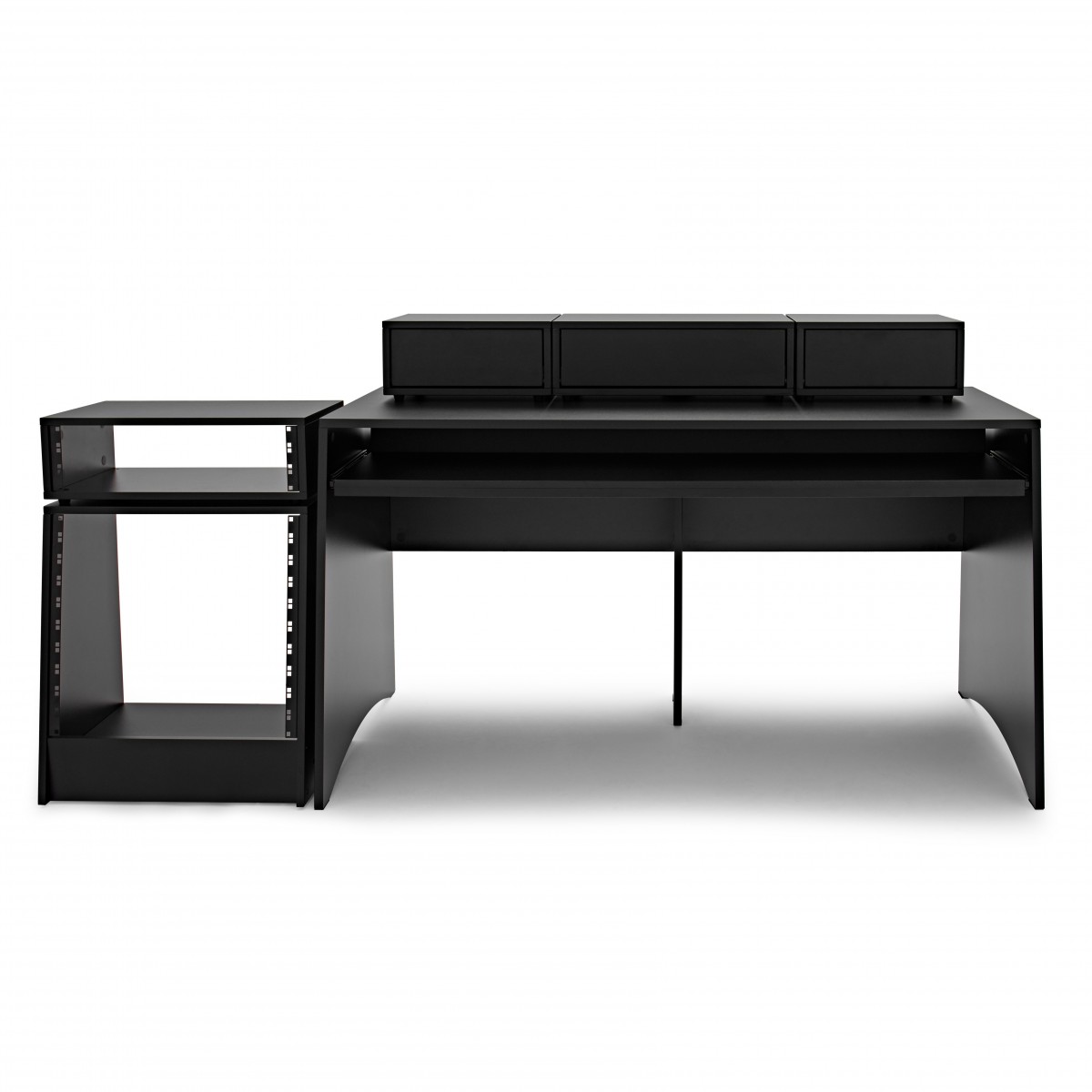
modul Modular Complete Studio System Black
 £2,499.00 ($3,174)
Future Sound Systems
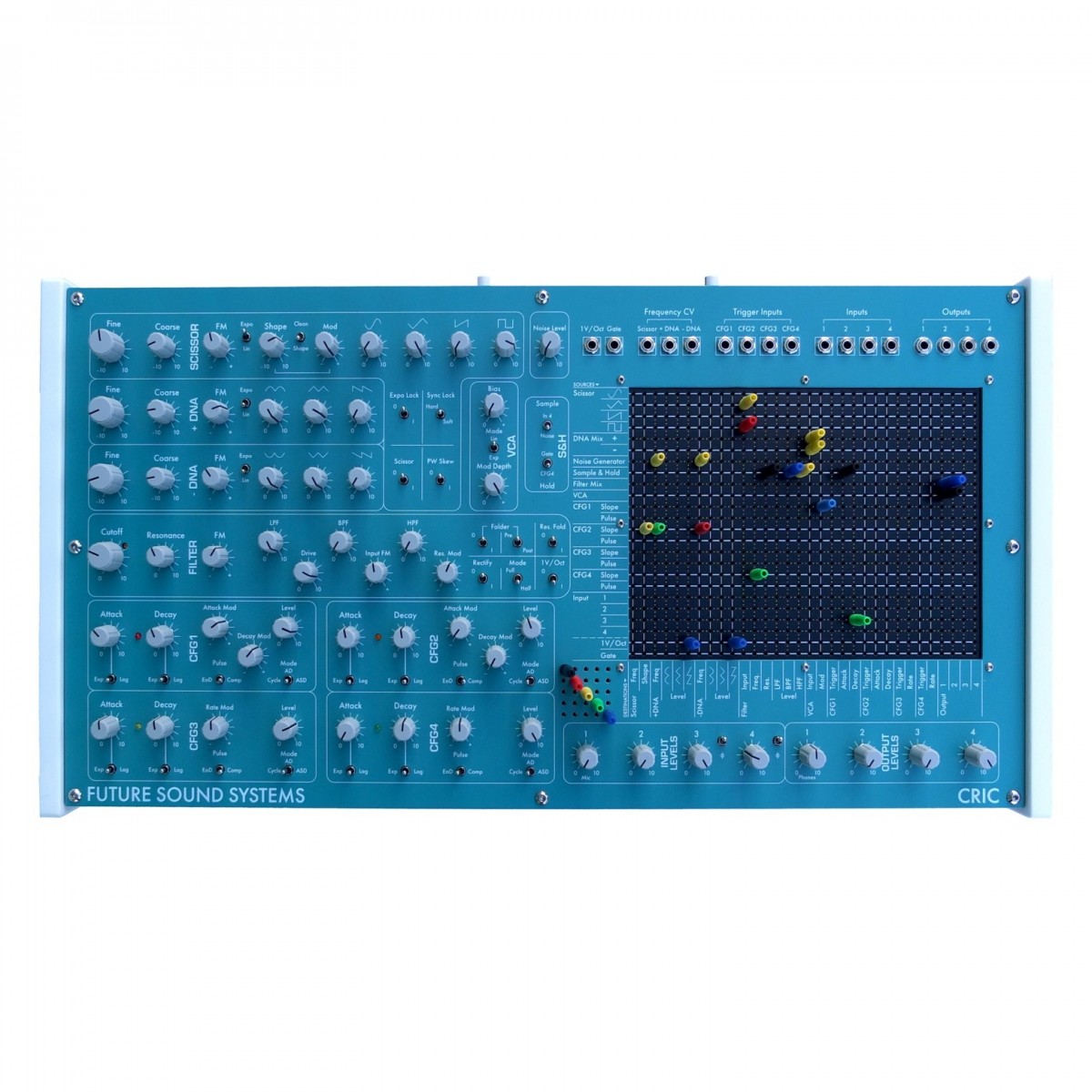
Future Sound Systems Cric Analog Matrix Synthesizer
Frequently asked questions
- Is the Behringer Neutron fully analog?
- Yes, the Behringer Neutron utilizes a pure analog signal path for its oscillators, filters, and overdrive. This ensures a classic, warm sonic character often associated with vintage hardware.
- What does semi-modular mean in the context of the Neutron?
- Semi-modular means the synthesizer has a default internal signal path (normalized) so it produces sound without any patch cables. However, users can use the 3.5mm patch bay to break those connections and create custom routings.
- Can the Neutron play chords?
- The Neutron is paraphonic, meaning while it has two oscillators that can play different notes, they both share a single filter and envelope section. It cannot play complex independent polyphonic chords like the Oberheim OB-X8.
- How many patch points does the Neutron have?
- The Neutron features a 56-point patch matrix. This includes 32 inputs and 24 outputs, providing extensive modulation possibilities for both internal and external signals.
- Does the Neutron include a built-in effects processor?
- It features an analog overdrive circuit and a bucket-brigade device (BBD) delay. These circuits allow for harmonic saturation and time-based modulation within the analog domain.
- What waveforms are available on the oscillators?
- The VCOs offer five waveforms: sine, triangle, sawtooth, square, and pulse. Users can move seamlessly between these shapes using the waveform blend control.
- Is the Neutron compatible with Eurorack systems?
- Yes, the Neutron's patch bay uses standard 3.5mm jacks and follows Eurorack voltage standards. The main circuit board can also be removed from its desktop chassis and mounted into a standard Eurorack case.
- Does the Neutron have a built-in keyboard?
- No, the Neutron is a desktop module without a keyboard. It can be controlled via MIDI from devices like a Yamaha MX49 II or through CV/Gate inputs from a sequencer.
- What is the function of the 'Tone' control on the oscillators?
- The Tone control allows for further harmonic shaping of the oscillator output before it reaches the filter. This provides an additional layer of sound design beyond basic waveform selection.
- Can I use the Neutron to process external audio?
- Yes, the patch bay includes an external audio input. This allows users to run external signals, such as a guitar or a drum machine like the Roland TR-08, through the Neutron's filter and overdrive.
- What kind of filter does the Neutron use?
- It uses a 12dB multi-mode VCF designed by Keith Moffatt. It can operate in Low Pass, Band Pass, and High Pass modes with controllable resonance.
- Does it have a noise generator?
- Yes, the Neutron includes an integrated white noise generator. This is useful for creating percussive sounds, wind effects, or adding grit to the oscillators.