
Gear article
Behringer WING Digital Mixer Black
The Behringer WING is a 48-channel, 28-bus digital mixing console designed for professional studio and live sound environments. It features a highly configurable interface with 24 motorised faders, a 10-inch touch screen, and integrated Midas PRO preamplifiers for high-fidelity audio processing.
See live pricesOverview
The Behringer WING represents a significant evolution in digital mixing technology, catering to both live sound reinforcement and studio production. The console is built around a 'Personal Mixing' philosophy, where the 48 input channels and 28 buses can be fully customised across three separate fader sections. The hardware is anchored by 8 Midas PRO preamps and 8 Midas PRO outputs, ensuring a professional standard of signal integrity and low-noise performance.
Interface and Control
Central to the WING's workflow is its 10-inch capacitive touch screen, which provides the primary navigation for routing, effects, and channel settings. The surface features 24 motorised 100mm faders divided into three configurable banks. This flexibility allows engineers to map inputs, buses, and DCAs according to their specific project needs rather than being confined to fixed layer structures.
Recording and Integration
For recording duties, the WING is equipped with a dual-SD card recorder, allowing for high-track-count live recordings without the need for an external computer. Additionally, it functions as a 48-channel USB audio interface, facilitating seamless integration with Digital Audio Workstations (DAWs). The console also supports expansion and networking protocols to adapt to various professional infrastructures.
Comparison to Alternatives
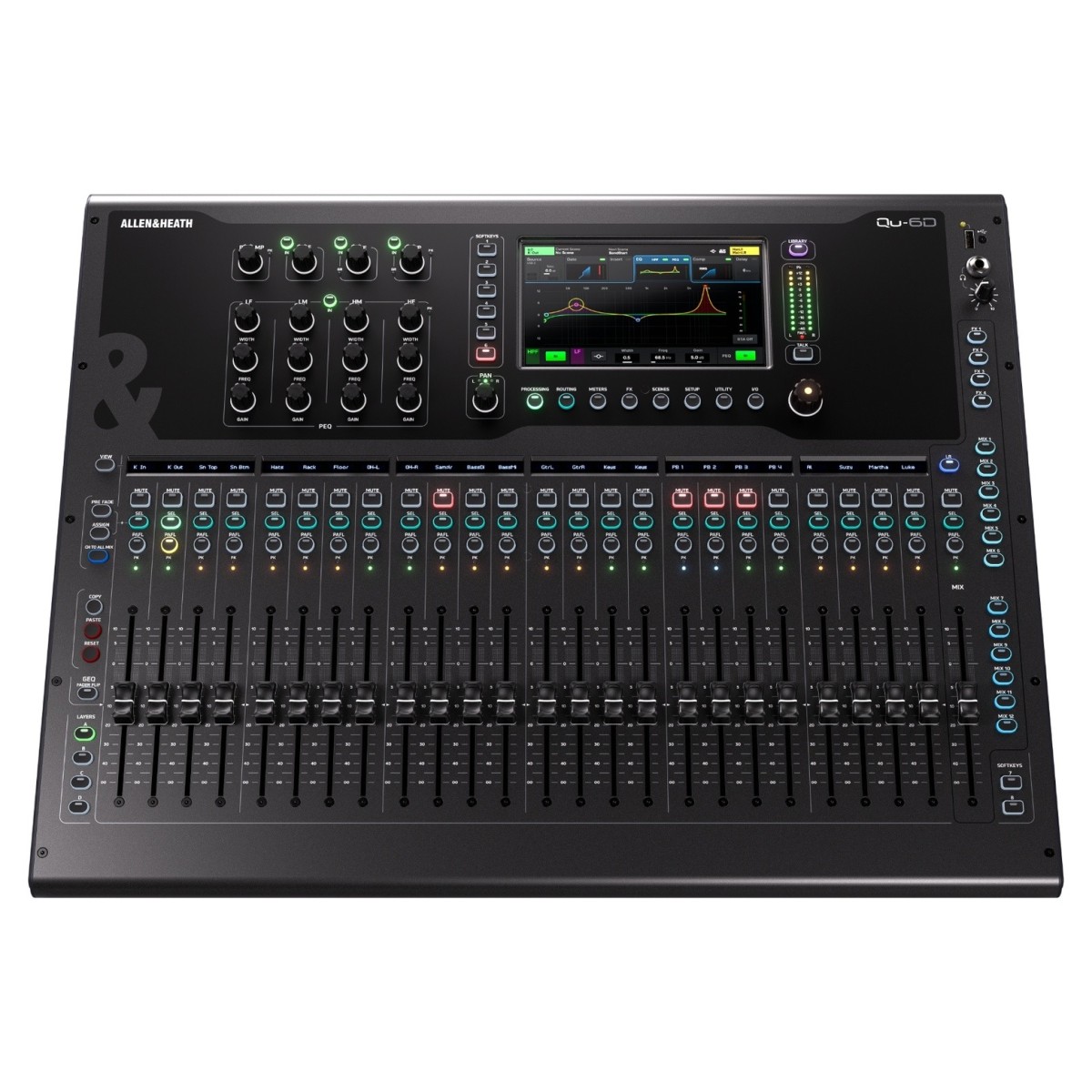
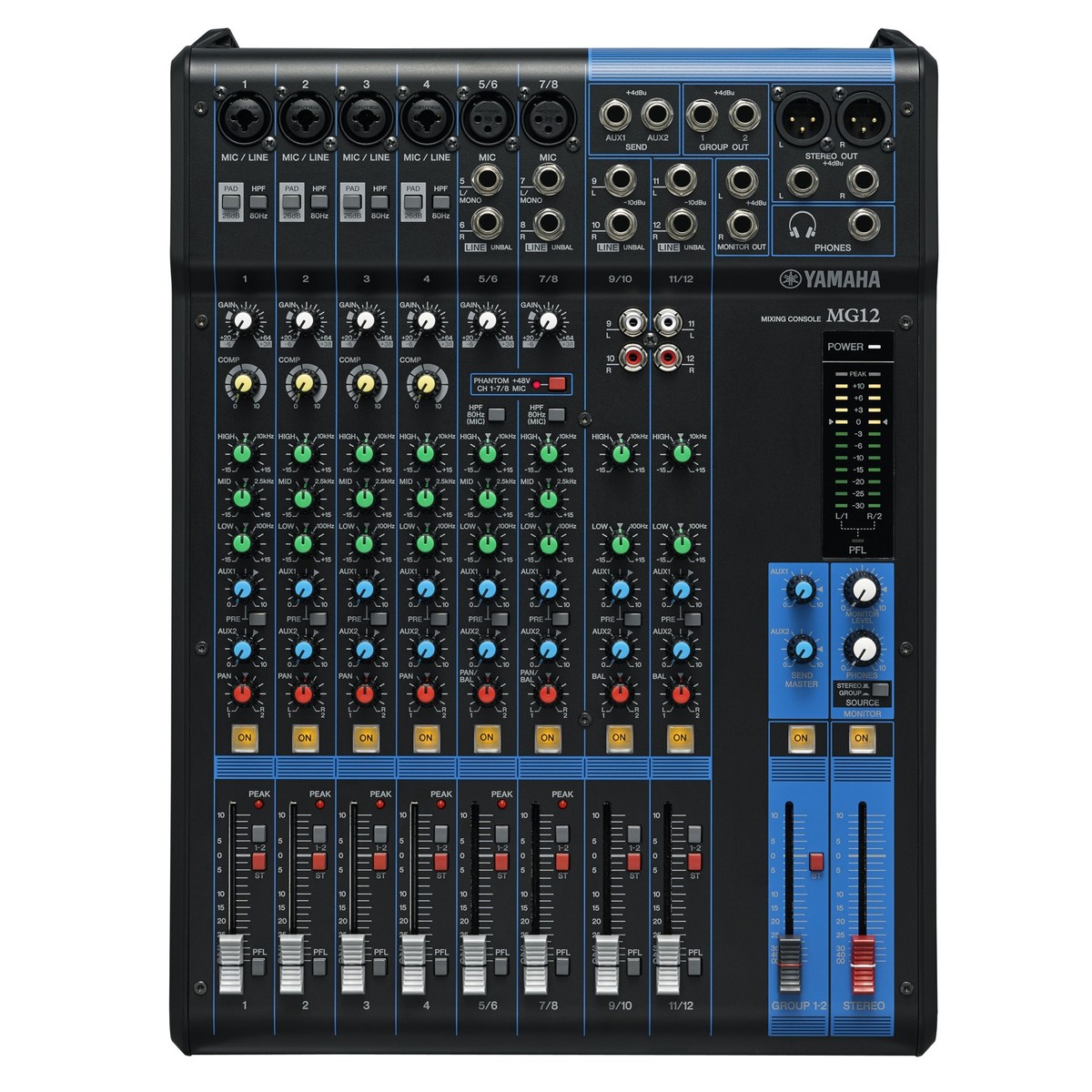
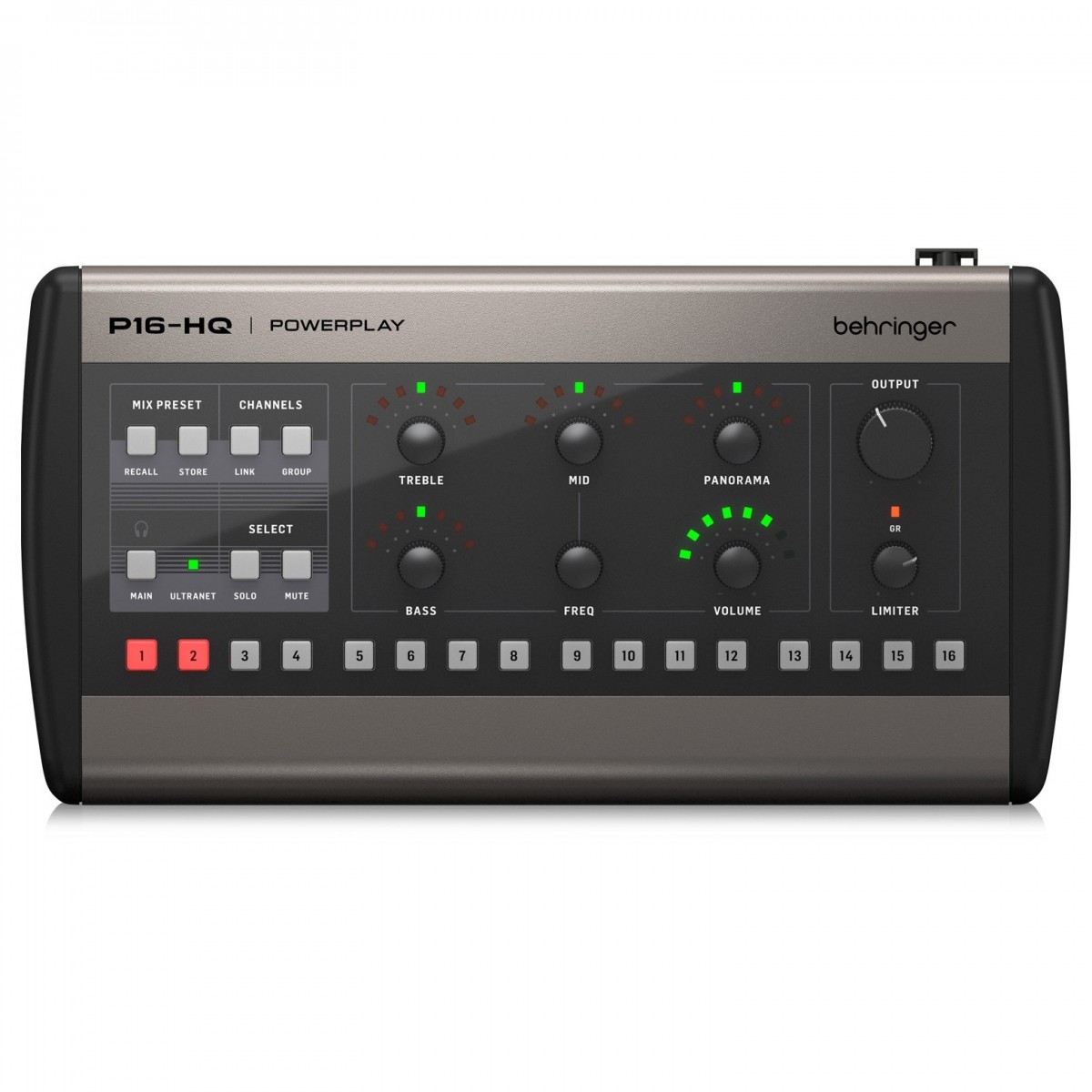
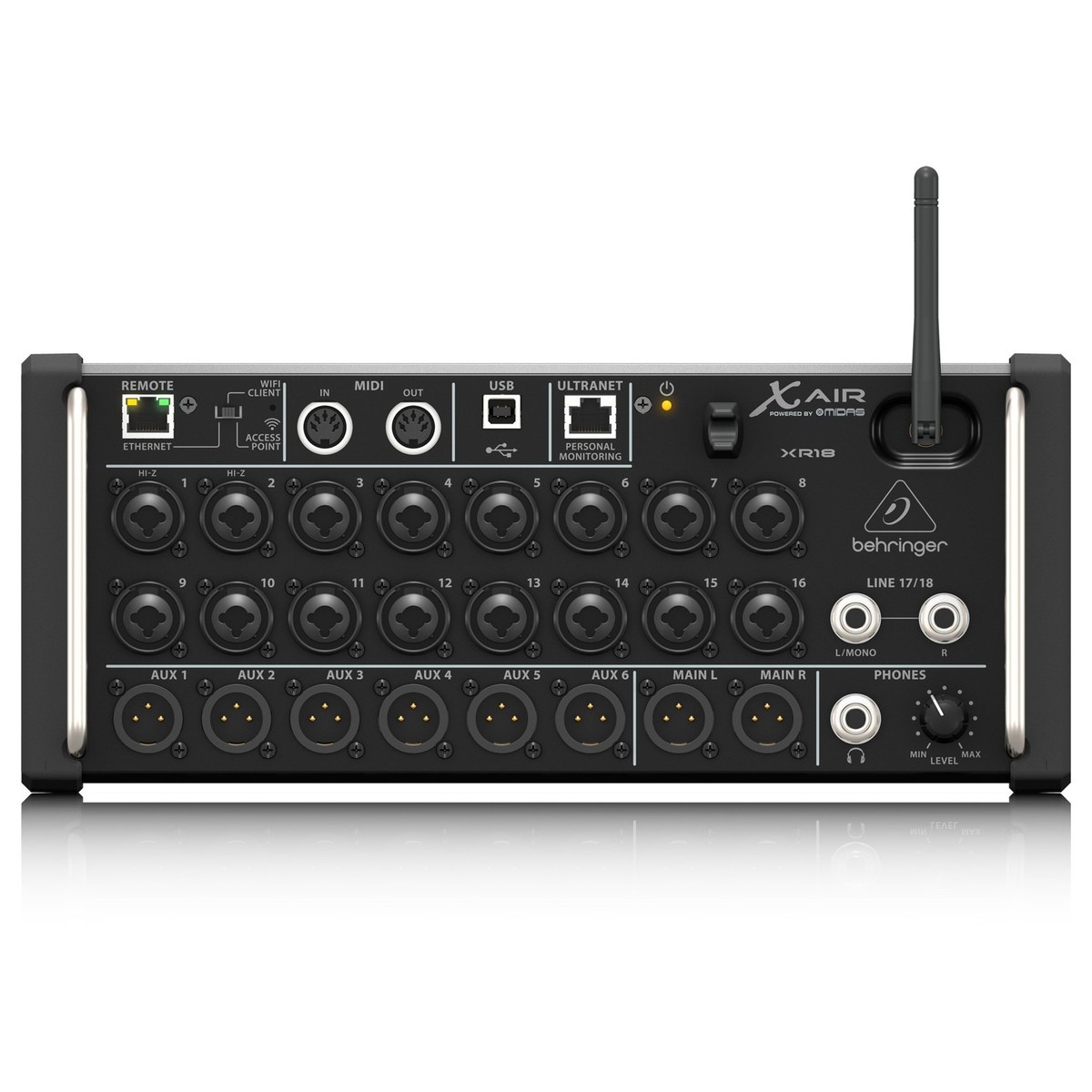
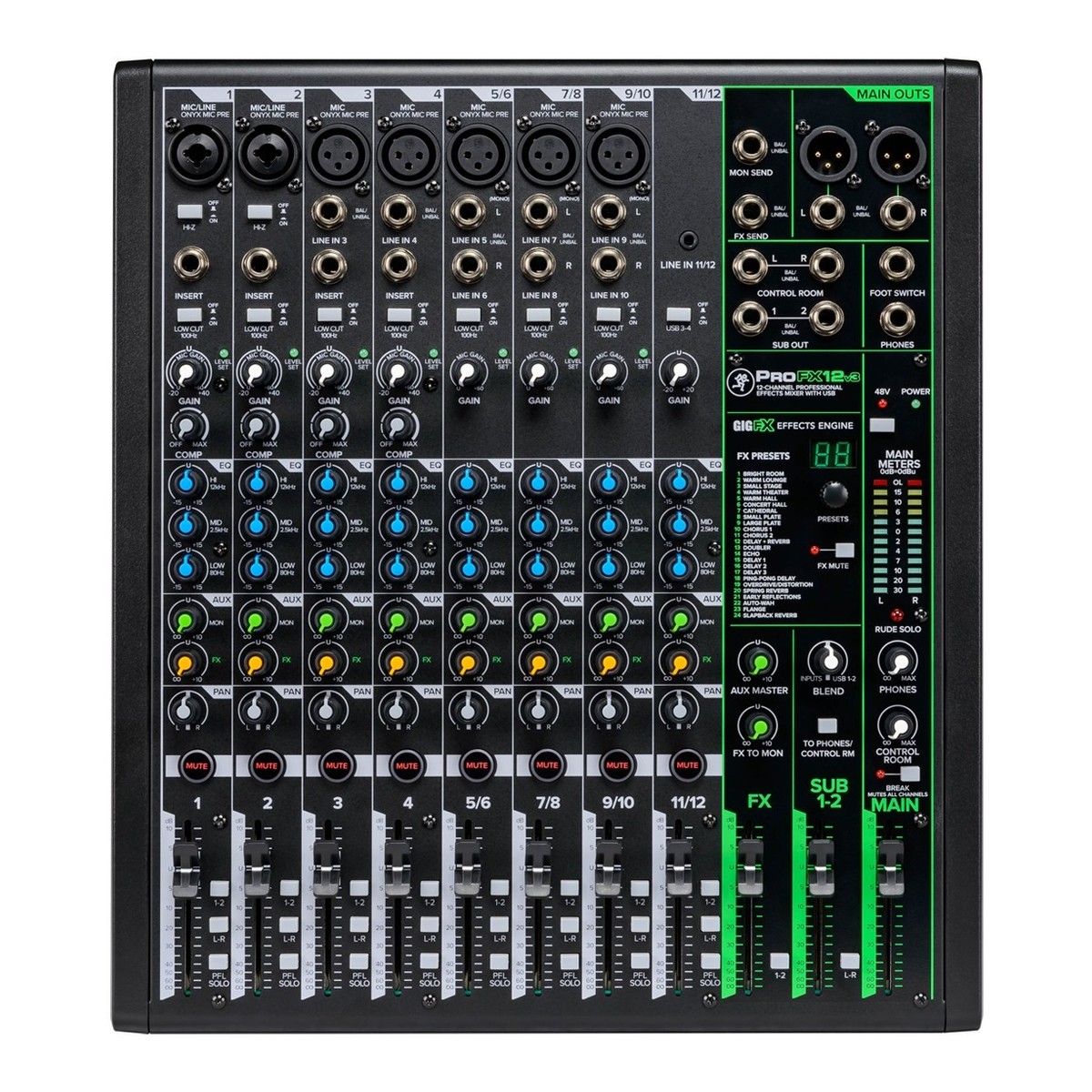
Within the Behringer ecosystem, the WING offers a higher channel count and more advanced touch-interface capabilities than the X AIR XR18. When compared to the Allen & Heath QU-6D, the WING focuses on a highly customisable fader layout and a larger touch interface. While analog mixers like the Yamaha MG12 or Mackie ProFX12v3 provide simplicity for small setups, the WING is designed for complex, high-channel-count scenarios that require extensive digital routing and processing.
Related gear
 £2,320.00 ($2,946)
Allen & Heath
Allen & Heath QU-6D Digital Mixer with Dante
 £1,690.00 ($2,146)
PreSonus
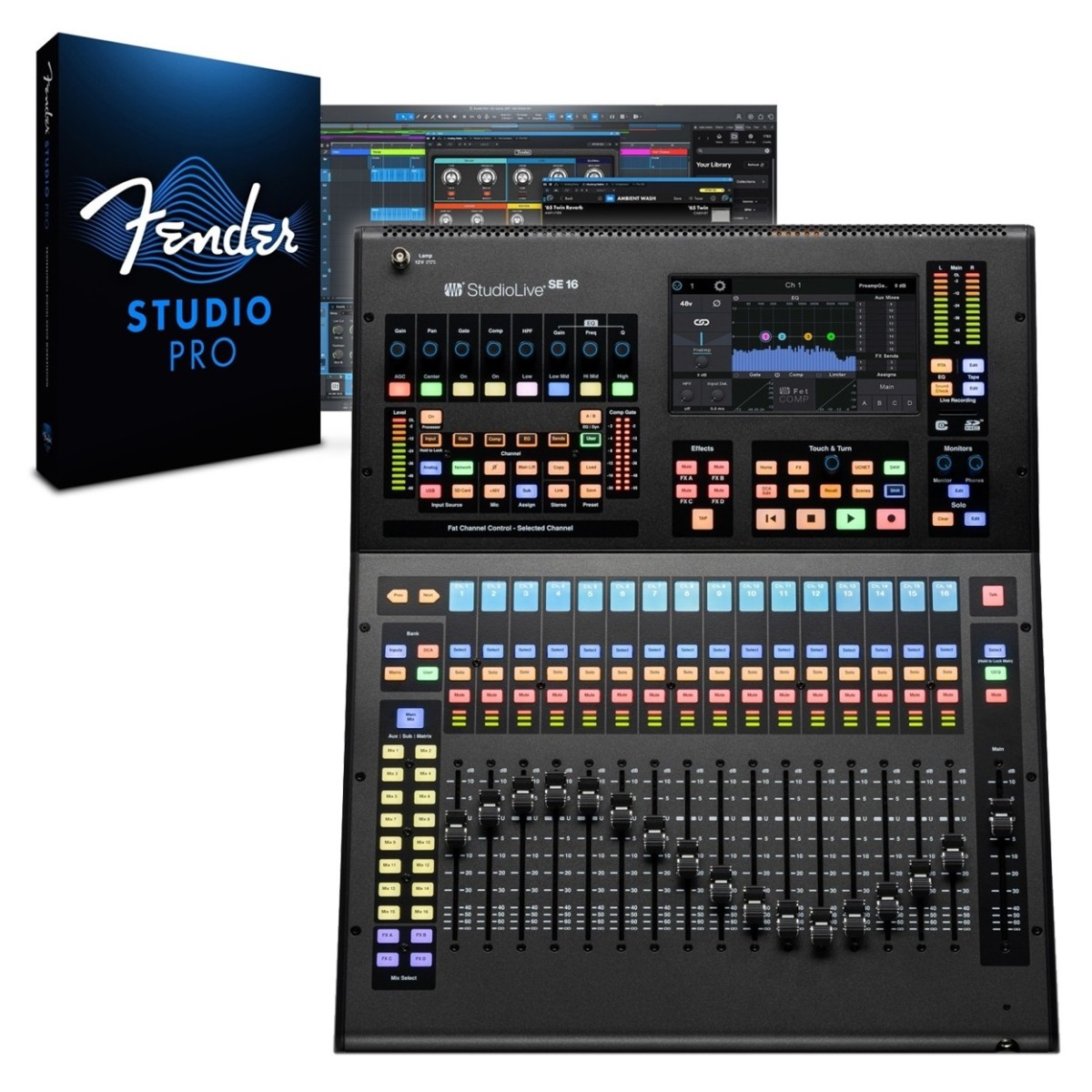
PreSonus StudioLive SE16 Digital Mixer
 £339.00 ($431)
PreSonus
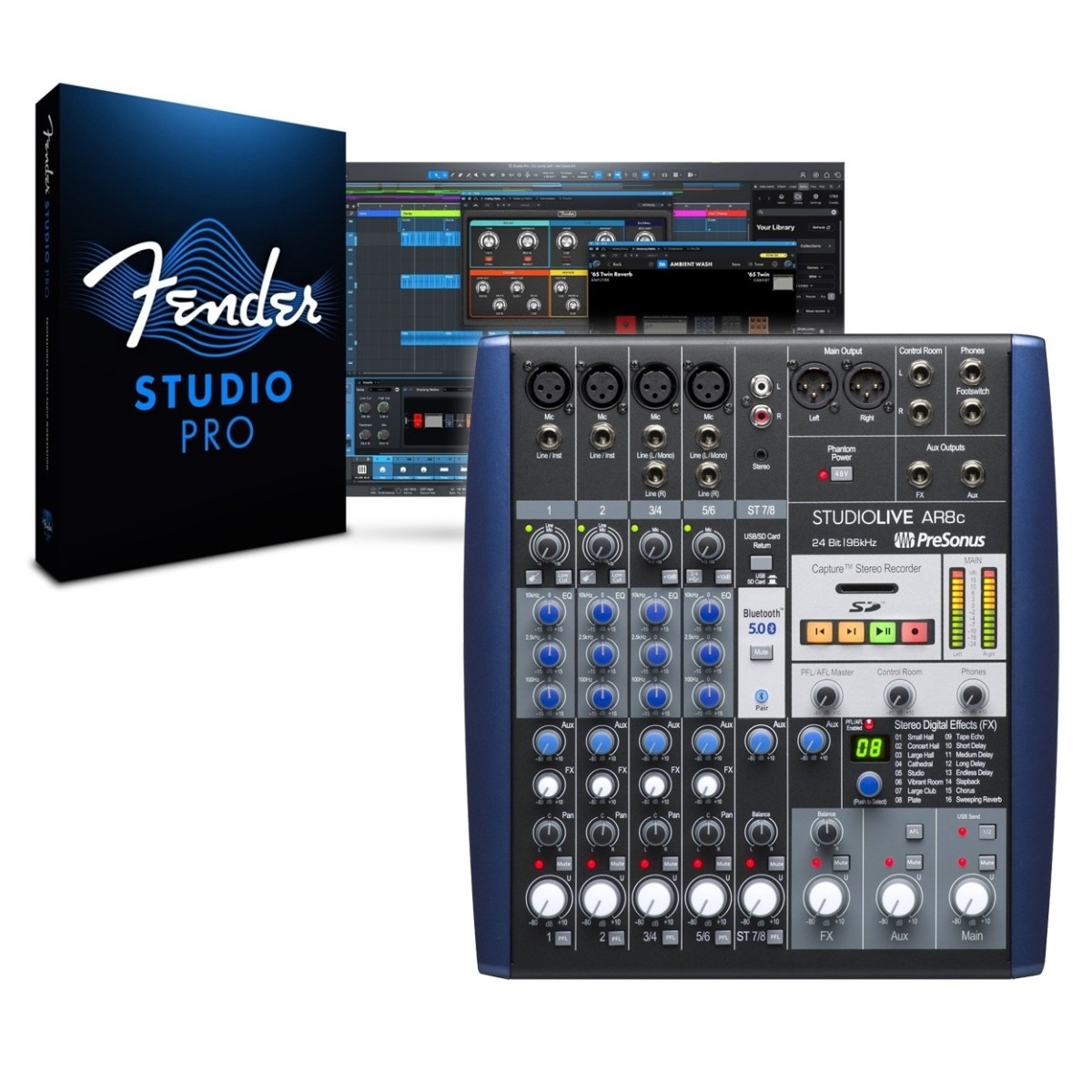
PreSonus StudioLive AR8c USB-C Mixer
 £85.00 ($108)
Mackie
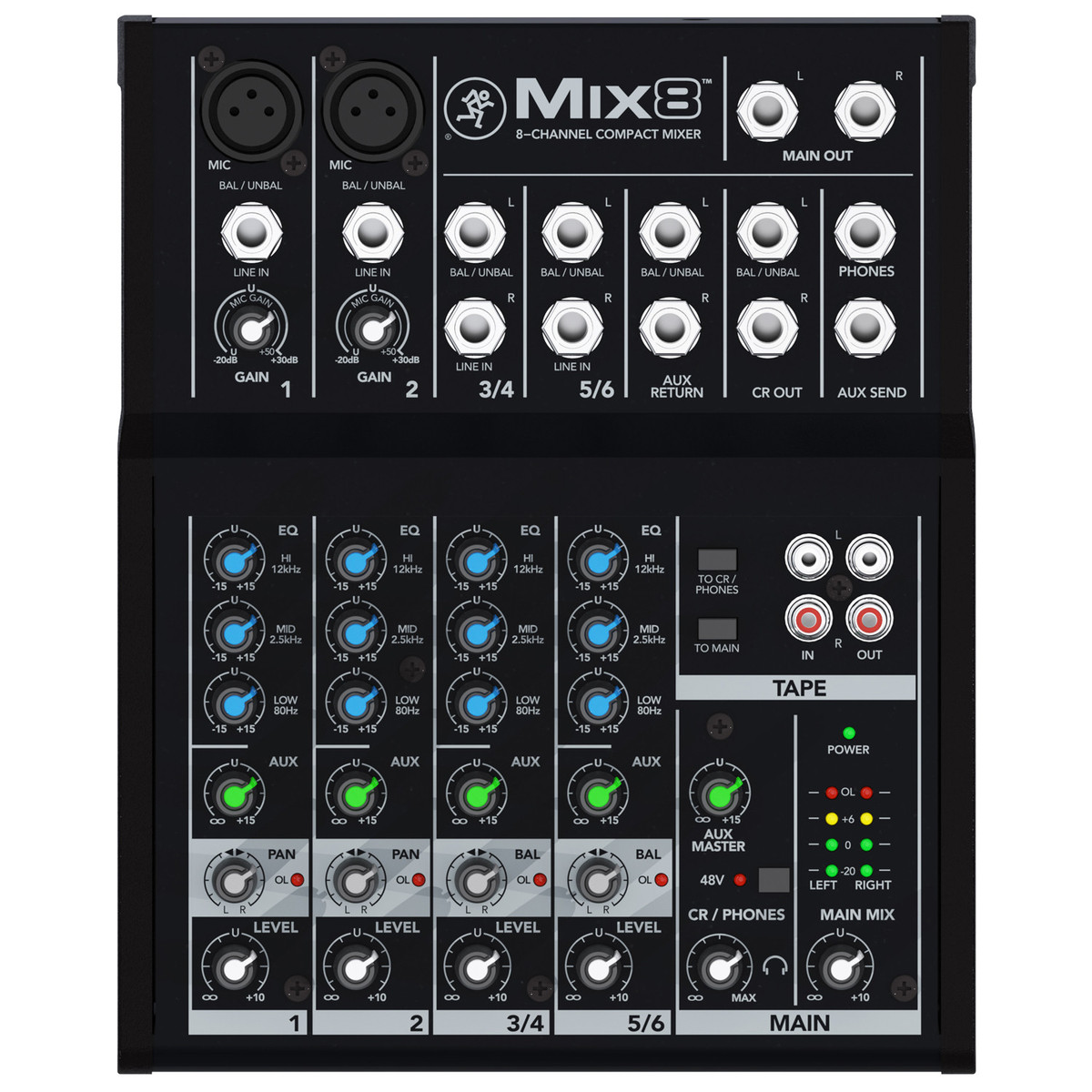
Mackie Mix8 Compact Mixer
 £304.00 ($386)
Yamaha
Yamaha MG12 Analog Mixer
 £719.42 ($914)
Behringer
Behringer P16-HQ 16-Channel Personal Monitoring Mixer
 £349.00 ($443)
Behringer
Behringer X AIR XR18 Digital Mixer
 £359.00 ($456)
Mackie
Mackie ProFX12v3 12-Channel Analog Mixer with USB
Frequently asked questions
- How many channels does the Behringer WING support?
- The console supports 48 input channels and features 28 buses for comprehensive signal routing.
- What type of preamps are used in the WING?
- The WING is equipped with 8 Midas PRO preamplifiers and 8 Midas PRO outputs to ensure high-tier audio quality.
- Does the WING have motorised faders?
- Yes, the console features 24 motorised 100mm faders that are fully configurable across the surface.
- Can the WING be used as an audio interface?
- The WING includes a 48-channel USB interface, allowing it to connect directly to a DAW for recording and playback.
- What are the recording options for live performances?
- The console features a dual-SD card slot that allows for high-channel-count recording and playback directly on the device.
- What is the size of the primary display?
- The WING features a 10-inch touch screen designed for intuitive navigation and precise control over mixing parameters.
- How does the WING differ from the X32 or X AIR series?
- The WING offers a more modern touch-based interface, more buses, and more flexible channel mapping compared to the older X32 or the compact X AIR XR18.
- Is the fader layout fixed or customisable?
- The 24 faders are fully configurable, meaning the user can assign any source or bus to any fader regardless of traditional layering.
- Does it support personal monitoring systems?
- Yes, it is compatible with Behringer's ecosystem, including products like the P16-HQ 16-channel personal monitoring mixer.
- What is the typical price for the Behringer WING?
- In the UK market, the console typically retails for approximately GBP 2299.
- Who is the primary target audience for this mixer?
- It is designed for professional studio engineers and live sound engineers who require high channel counts and advanced routing.
- How many buses are available for mixing?
- The WING provides 28 buses, offering significant flexibility for monitors, groups, and effects processing.