
Gear article
D'Addario Classic Series XLR Microphone Cable (10ft)
The D'Addario Classic Series 10ft XLR cable is a professional-grade audio interconnect featuring a Male XLR to Female XLR configuration. Designed for durability and signal integrity, this 10-foot cable is engineered for short-distance applications in home studios and compact live performance environments.
See live pricesOverview
The D'Addario Classic Series represents the brand's commitment to providing reliable, high-quality audio connectivity at an accessible price point. This particular model utilizes standard XLR termination (Male to Female), making it the industry-standard choice for connecting microphones to preamplifiers, mixers, and audio interfaces. At a length of 10 feet, it is specifically tailored for environments where cable management is critical and long runs are unnecessary.
Construction and Key Features
D'Addario emphasises a balance of quality and value within the Classic Series. The cable features robust shielding designed to protect against electromagnetic interference (EMI) and radio-frequency interference (RFI). The connectors are engineered for secure mechanical fitment, ensuring that the latching mechanism on the female end and the pins on the male end maintain consistent contact even under the physical stresses of stage use.
Sound Character
As a component of the Classic Series, this cable is designed for transparency. Its primary function is to deliver a flat frequency response from the source to the destination without introducing unwanted noise or coloration. By utilising quality conductors, D'Addario ensures that the nuances of a vocal or instrument performance are preserved through the signal chain.
Applications and Suitability
The 10-foot length is widely considered 'ideal for shorter runs.' Typical use cases include:
- Home Studios: Connecting a vocal microphone to an interface placed on a nearby desk.
- Small Stages: Patching microphones on a drum kit or connecting a singer-songwriter's mic where the mixer is positioned close by.
- Podcast Setups: Maintaining a tidy workspace by avoiding excess coiled cable.
Comparison to Alternatives
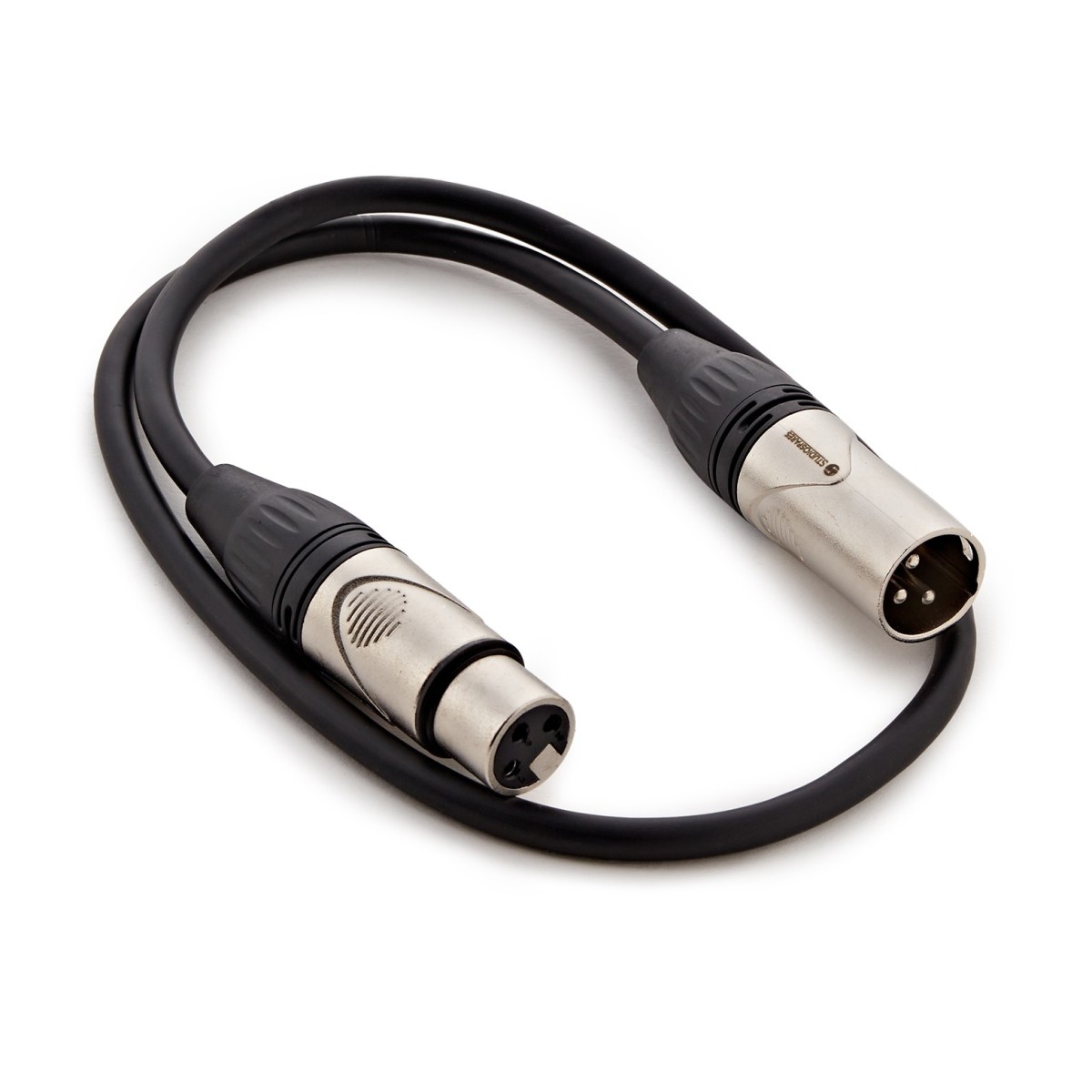
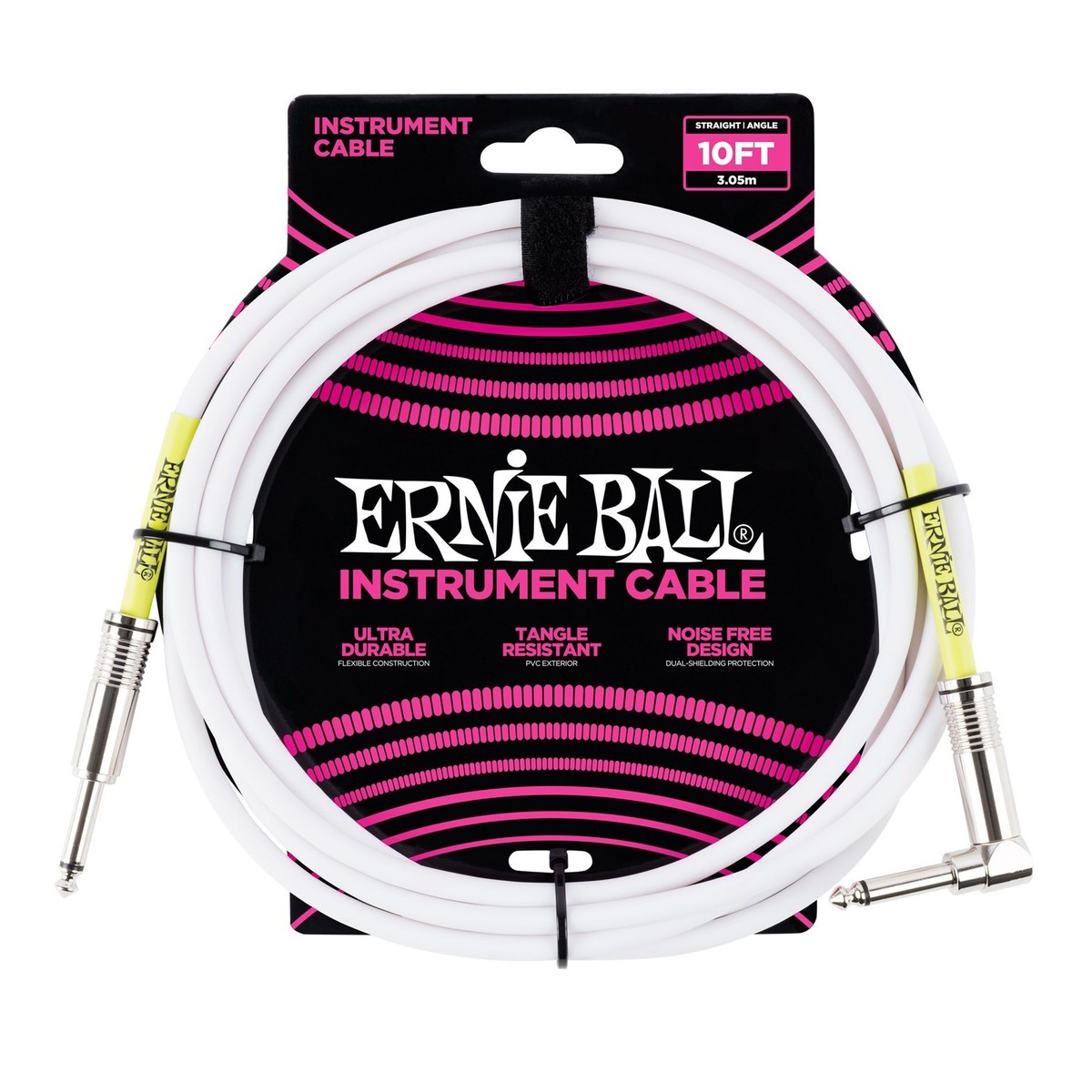
Compared to ultra-short options like the Studiospares 30cm or 60cm patch cables, the D'Addario 10ft cable offers significantly more mobility for a performer. While instrument cables like the Ernie Ball P06049 10ft use TS (Tip-Sleeve) connectors for unbalanced signals, the D'Addario XLR remains a balanced solution, which is essential for low-noise microphone operation. For users requiring specialised lighting connections, the Adam Hall 5-Pin DMX cable is a distinct alternative that, while appearing similar, serves an entirely different electrical purpose (data vs audio).
Related gear
 £5.99 ($8)
Studiospares
Studiospares Standard XLR (M) - XLR (F) Cable 60cm
 £17.57 ($22)
Ernie Ball
Ernie Ball P06049 10ft Straight-Angle Instrument Cable White
 £32.00 ($41)
LD Systems
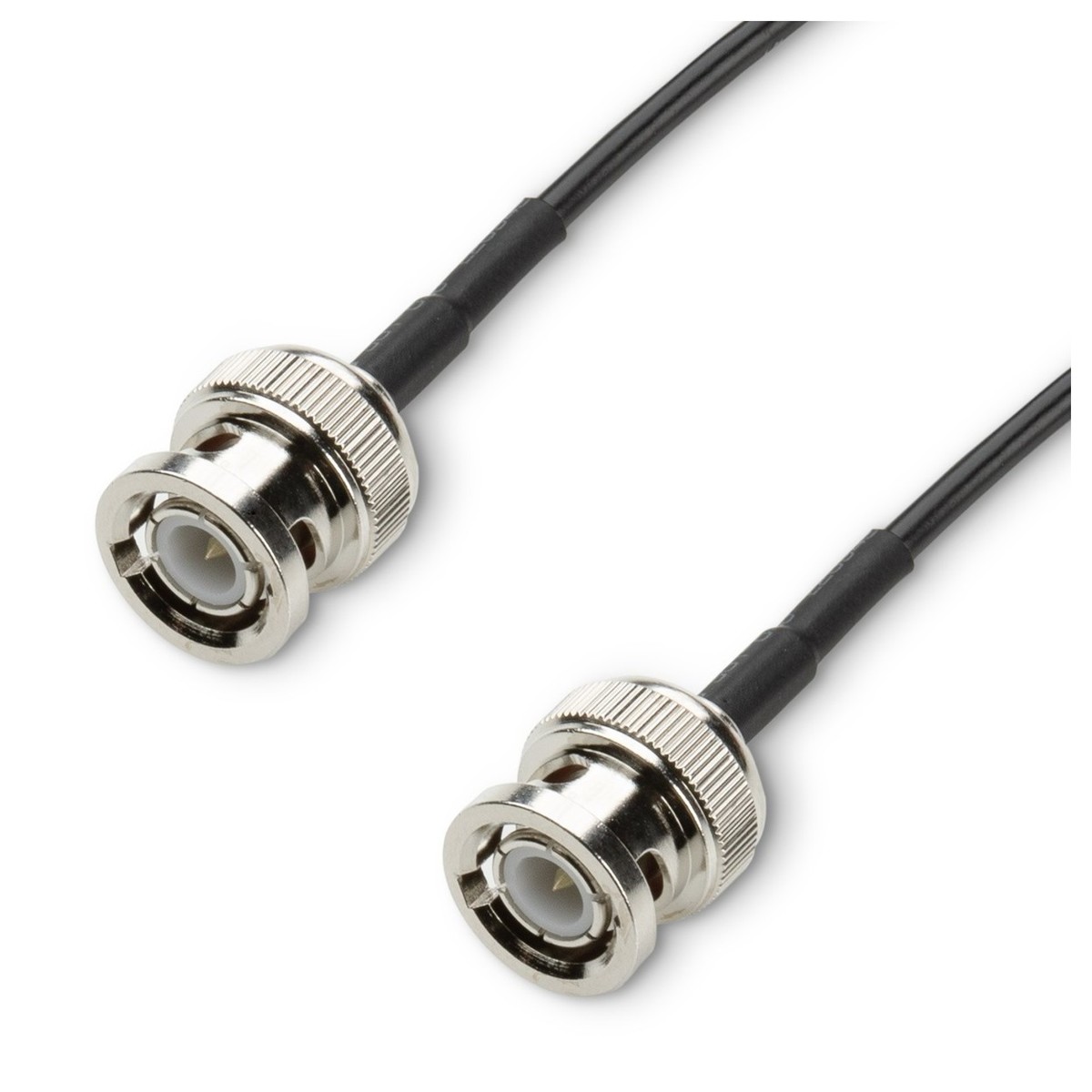
LD Systems WS100BNC10 BNC to BNC Antenna Cable 10m
 £4.99 ($6)
Gear4Music
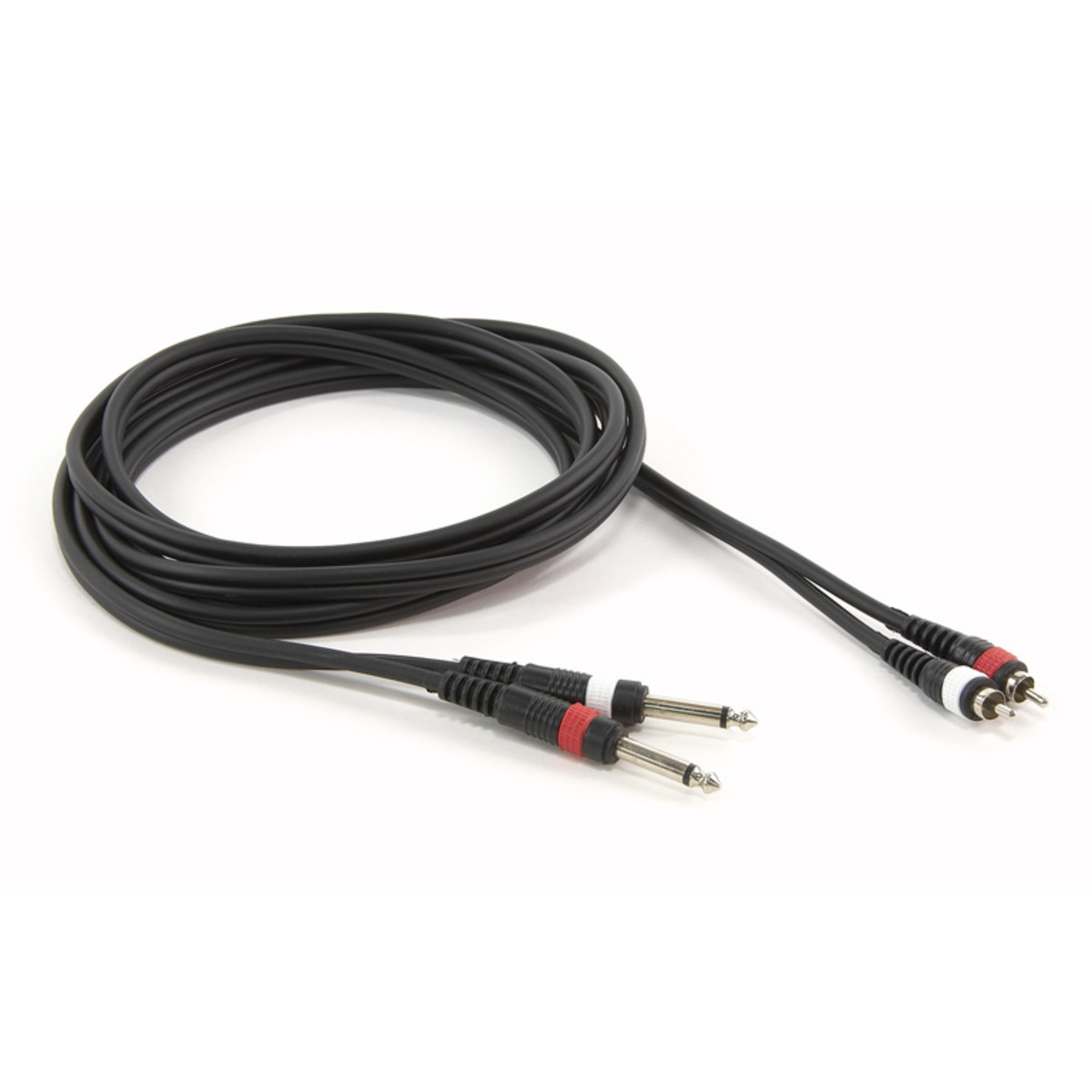
Essentials Dual Jack to RCA Phono Cable 3m
 £10.50 ($13)
Neutrik
Neutrik NC3FRX Right-Angled 3-Pole Female XLR Connector
 £19.00 ($24)
Neutrik
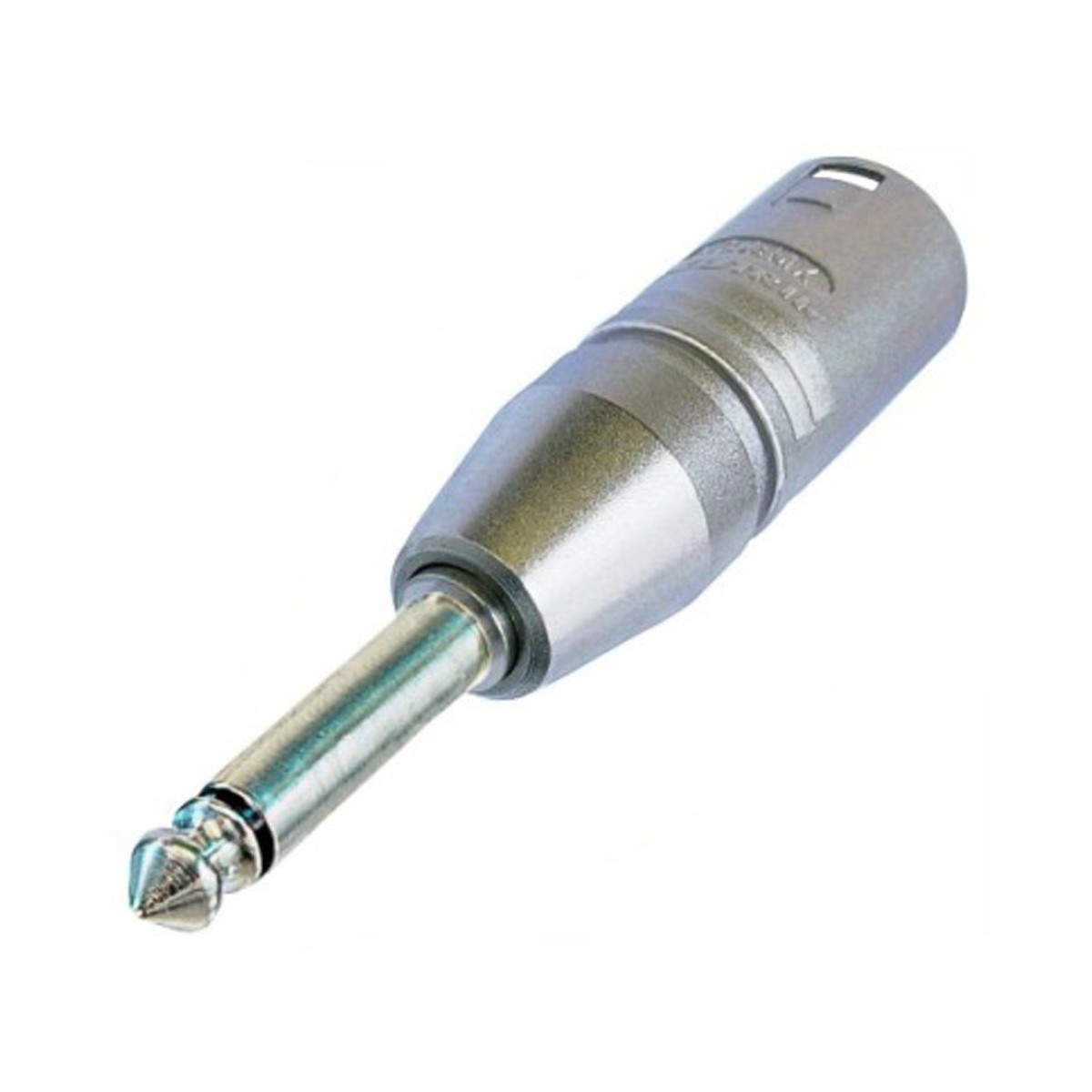
Neutrik NA2MP Male XLR - 1/4 Jack Adaptor
 £30.00 ($38)
Adam Hall
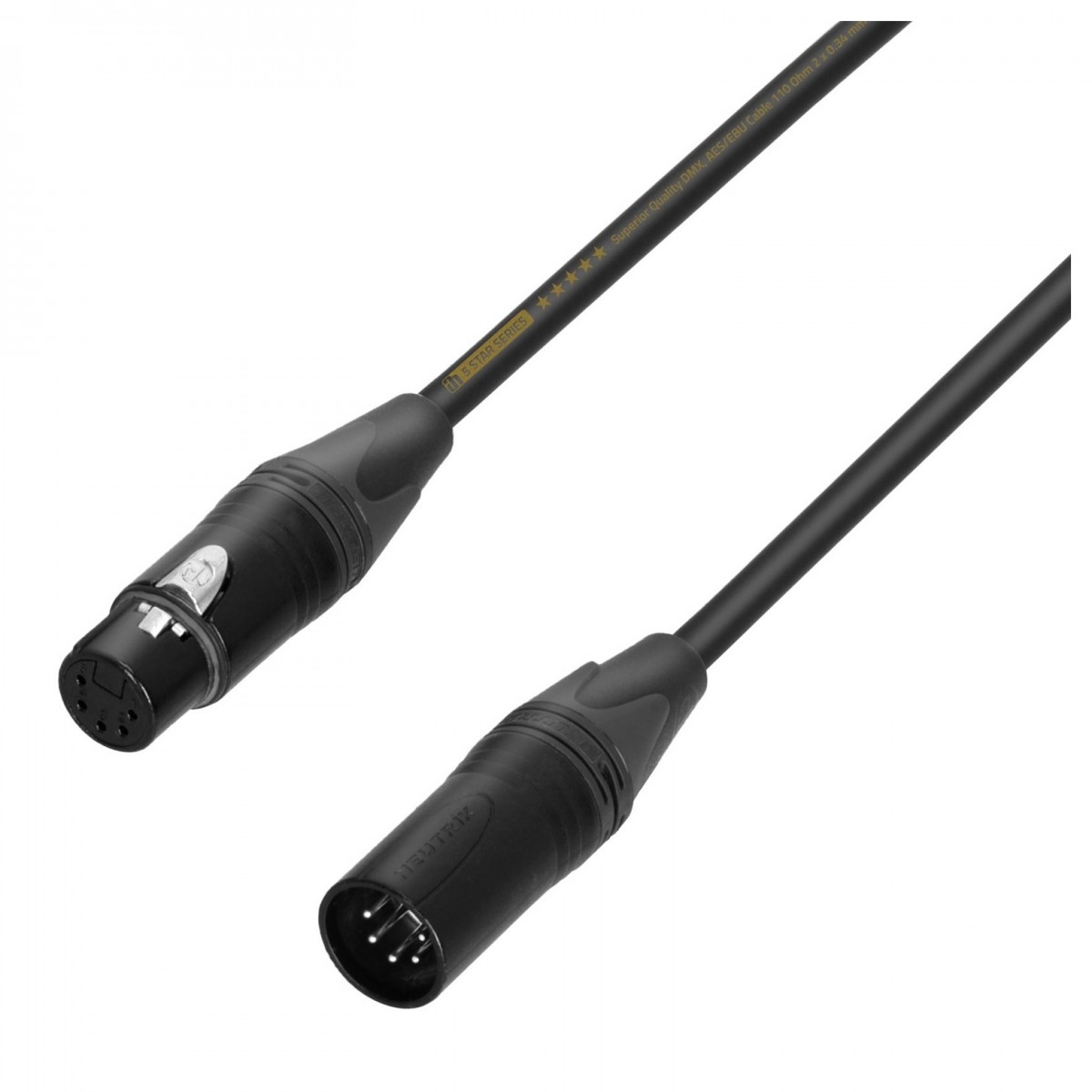
Adam Hall 5 STAR Neutrik DMX 5-Pin Lighting Cable 20m
 £4.99 ($6)
Studiospares
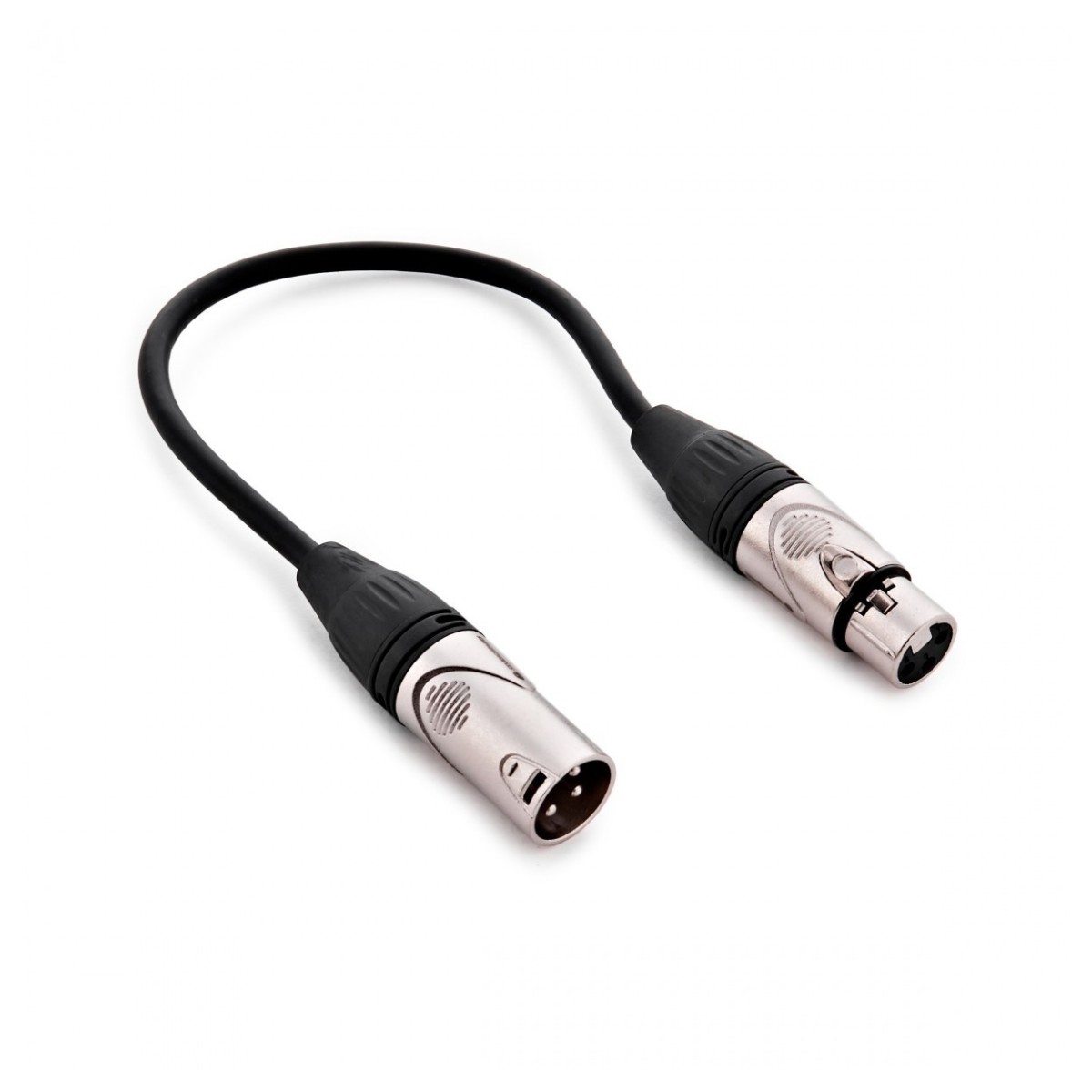
Studiospares Standard XLR (M) - XLR (F) Patch Cable 30cm
Frequently asked questions
- What is the primary use for the D'Addario 10ft Classic Series XLR cable?
- It is primarily used to connect microphones to audio interfaces, mixers, or preamplifiers. Its 10-foot length makes it particularly suitable for home studios and smaller stage setups where longer cables would create clutter.
- What connectors does this cable use?
- The cable features a 3-pin XLR Male connector on one end and a 3-pin XLR Female connector on the other. This is the standard configuration for professional microphone cables.
- Is this cable balanced or unbalanced?
- This is a balanced cable. Balanced XLR cables are designed to reject external noise and interference, which is critical for maintaining high audio quality over the signal path.
- Can I use this cable for a guitar?
- Generally no, unless your guitar has an onboard XLR output or you are coming out of a DI box. Most guitars use 1/4 inch TS cables like the Ernie Ball P06049 instrument cable.
- Is 10 feet long enough for a live stage?
- It is ideal for smaller stages or specific applications like miking a drum kit where the snake is close by. For large stages where the performer needs to move extensively, a longer cable may be required.
- How does the Classic Series differ from other D'Addario cables?
- The Classic Series is positioned as a high-value entry, focusing on essential reliability and signal quality. It provides professional performance at a price point suited for both hobbyists and working musicians.
- Can this cable be used for DMX lighting?
- While it may physically fit some 3-pin DMX fixtures, it is an audio cable. For dedicated lighting setups, a 5-pin DMX cable like the Adam Hall 5 STAR is typically recommended to ensure data integrity.
- Does the cable have shielding?
- Yes, D'Addario Classic Series cables include shielding to protect the signal from EMI and RFI. This prevents hum and buzz from entering your audio recordings or live mix.
- What is the typical price for this cable?
- In the UK market, this cable typically retails for approximately £16.00. This makes it an affordable yet professional-grade option for various audio tasks.
- Can I use this as a patch cable?
- Yes, though for very tight spaces like a rack, shorter cables like the Studiospares 30cm patch cable might be more efficient. The 10ft length is better if you need a bit of reach between equipment.
- Is this cable suitable for phantom power?
- Yes, balanced XLR cables are designed to safely carry +48V phantom power from a mixer or interface to a condenser microphone. The D'Addario Classic Series handles this standard requirement reliably.
- What does 'XLR (M) to XLR (F)' mean?
- It indicates the gender of the connectors. The Female (F) end plugs into the microphone, while the Male (M) end plugs into the input of your mixer or audio interface.