
Gear article
Erica Synths Cowbell
The Erica Synths Cowbell is a compact Eurorack percussion module based on the legendary TR-808 cowbell circuit. Developed in collaboration with e-licktronic, it expands upon the Yocto design by adding dedicated Tune CV controls for dynamic modular integration.
See live pricesOverview
The Erica Synths Cowbell is an analogue percussion module designed to bring the classic metallic tones of 1980s drum machines into the modular format. It is an enhanced iteration of the Yocto (808) cowbell circuit, prioritising a streamlined interface while offering expanded control over pitch. The module is housed in a compact form factor, making it an efficient addition to drum-focused Eurorack systems.
History and Development
Erica Synths developed this module alongside the French engineering firm e-licktronic, known for their precise recreations of vintage Roland circuitry. By adapting the Yocto project's cowbell—a highly regarded TR-808 clone—Erica Synths transitioned a classic DIY design into a professional, ready-to-use Eurorack module. This collaboration ensured that the core analogue sound engine remained faithful to the original hardware while meeting modern modular standards.
Design and Interface
The module features three primary rotary controls and four patch points. The interface is divided into:
- Tune: Sets the base frequency of the cowbell sound.
- Decay: Determines the length of the sound, ranging from short blips to longer ringing tones.
- Tune CV Level: An attenuator for the Tune CV input, allowing for precise control over pitch modulation.
Connectivity includes a Trigger input for firing the sound, an Accent input for velocity-style volume variations, and a Tune CV input for external pitch sequencing or vibrato effects.
Sound Character
The sound of the Erica Synths Cowbell is distinctly analogue and metallic, echoing the dual-oscillator architecture of the original TR-808. It provides the iconic 'boxy' and 'sharp' timbre associated with vintage electronic percussion. The addition of the Tune CV input allows the module to move beyond static percussion, enabling the creation of natural-sounding vibratos, melodic percussion sequences, or aggressive pitch sweeps.
Suitability and Comparison
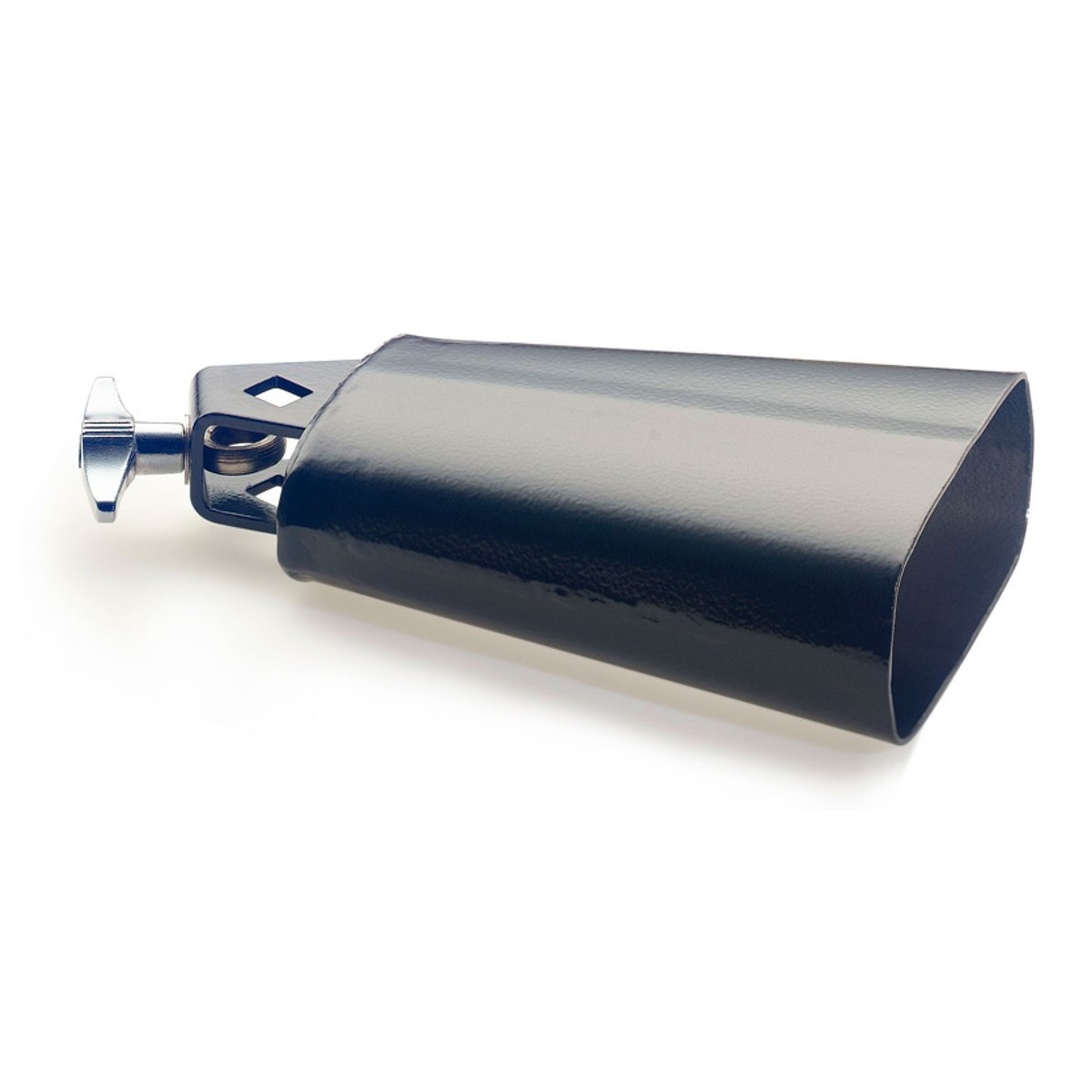
This module is ideal for electronic musicians and modular performers who require a dedicated, high-quality cowbell without the footprint of a full drum machine. While traditional acoustic cowbells like the Stagg Rock 5-1/2" offer organic resonance, the Erica Synths module provides the specific electronic character needed for techno, house, and hip-hop. Compared to digital alternatives, its purely analogue signal path ensures a warm, punchy response that interacts well with modular distortion and filtering.
Related gear
 £3.99 ($5)
Stagg
Stagg Plastic Egg Maracas Red
 £9.99 ($13)
Stagg
Stagg Rock 5-1/2" Cowbell Black
 £119.00 ($151)
Sonor
Sonor Orff NG31 Alto Chromatic Glockenspiel
 £23.70 ($30)
Remo
Remo 6 Single Row Headless Tambourine Black
 £299.00 ($380)
Meinl
Meinl Planetary Tuned Crystal Singing Bowl 12" Earth Year / Om
 £16.00 ($20)
Fender
Fender Blues Deluxe Harmonica A
 £23.80 ($30)
Meinl
Meinl Spin Spark Shaker Black Nickel
 £7.30 ($9)
Meinl
Meinl Small Plastic Egg Maracas Black
Frequently asked questions
- What is the Erica Synths Cowbell?
- It is a compact Eurorack percussion module designed to recreate and expand upon the classic analogue cowbell sounds found in vintage drum machines like the TR-808.
- Who designed the circuitry for this module?
- The module was developed through a collaboration between Erica Synths and the French company e-licktronic, who are experts in vintage drum machine recreations.
- How does the Tune CV input work?
- The Tune CV input allows you to control the pitch of the cowbell using external voltage sources. This can be used for sequencing different notes or adding vibrato via an LFO.
- What is the purpose of the Tune CV attenuator?
- The Tune CV level knob acts as an attenuator, letting you dial in exactly how much an external voltage source affects the pitch, which is essential for subtle, natural-sounding modulation.
- Does the module have an Accent input?
- Yes, it includes a dedicated Accent input that allows for volume dynamics in your sequences, making the percussion sound more expressive and less repetitive.
- What is the source of the cowbell sound engine?
- The sound engine is an expanded version of the Yocto cowbell, which itself is a faithful recreation of the original Roland TR-808 cowbell circuit.
- How many patch points are on the module?
- There are four patch points in total: Trigger input, Accent input, Tune CV input, and the primary Audio Output.
- Is the Erica Synths Cowbell digital or analogue?
- The module uses an entirely analogue signal path to achieve its classic, warm, and punchy percussion tones.
- Can I adjust the length of the cowbell sound?
- Yes, the module features a Decay control that allows you to adjust the duration of the sound from a tight click to a longer sustained ring.
- What kind of sequences is this module best for?
- It is ideal for drum sequences in genres like techno, electro, and house where a consistent and iconic electronic cowbell sound is required.
- How does it compare to a standard acoustic cowbell?
- Unlike an acoustic cowbell, such as those made by Stagg, this is an electronic synthesizer. It produces a specific electronic timbre and offers voltage control over its parameters.
- Is the design of the module user-friendly?
- Yes, it features a streamlined design with clear, large knobs for Tune and Decay, making it easy to perform with during live modular sets.