
Glossary
Sample Rate and Bit Depth
Sample rate and bit depth are the two primary metrics defining the quality and accuracy of digital audio recordings. Sample rate determines the frequency range that can be captured, while bit depth dictates the dynamic range and noise floor of the signal.
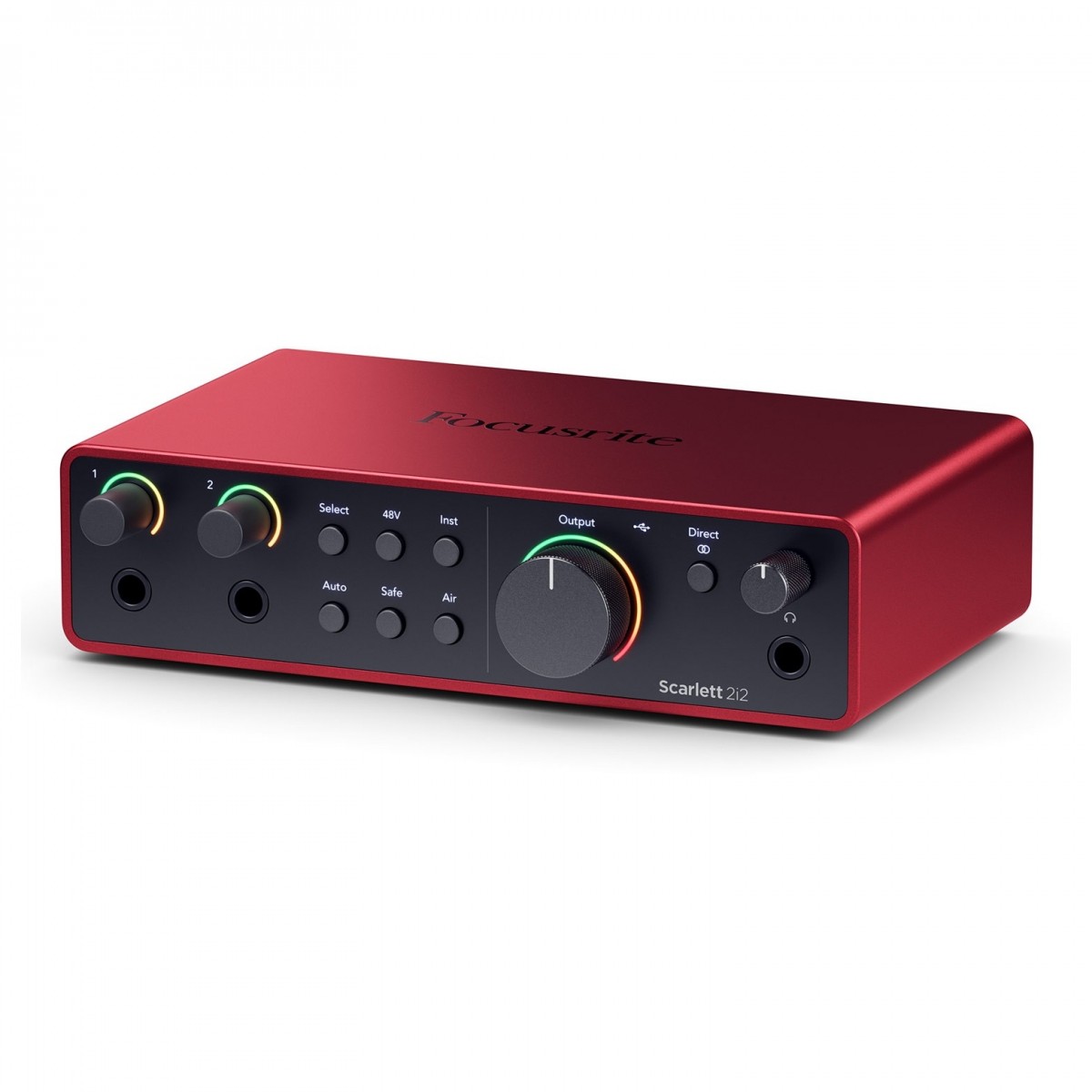
Conceptual Overview
Digital audio functions by taking snapshots of an analog waveform at regular intervals. This process, known as Pulse Code Modulation (PCM), relies on two axes: time and amplitude. The sample rate represents the horizontal axis (time), while bit depth represents the vertical axis (amplitude). Together, they determine how closely the digital stair-step reconstruction resembles the original continuous analog wave.
Sample Rate and the Nyquist Theorem
The sample rate, measured in Hertz (Hz) or kilohertz (kHz), defines how many times per second the audio signal is measured. According to the Nyquist-Shannon sampling theorem, to capture a specific frequency accurately, the sample rate must be at least twice the highest frequency intended to be recorded.
Because human hearing typically ranges from 20 Hz to 20,000 Hz (20 kHz), a sample rate of at least 40 kHz is required. The industry standard of 44.1 kHz provides a small 'buffer zone' for anti-aliasing filters to operate without cutting into the audible spectrum. Higher sample rates like 96 kHz capture ultrasonic frequencies and allow for more transparent processing in complex digital environments.
Bit Depth and Dynamic Range
Bit depth determines the resolution of each individual sample's amplitude. Every additional bit provides a more precise measurement of the signal's volume, effectively reducing quantization error (noise).
The mathematical rule for bit depth is that each bit offers approximately 6 dB of dynamic range.
- 16-bit: Offers 96 dB of dynamic range.
- 24-bit: Offers 144 dB of dynamic range.
In practical terms, a higher bit depth lowers the noise floor, allowing for cleaner recordings of quiet passages and providing more 'headroom' before digital clipping occurs.
32-bit Floating Point
Standard 16 and 24-bit formats are 'fixed point,' meaning they have absolute maximum and minimum values. 32-bit float audio uses a different mathematical approach (mantissa and exponent) that allows for a theoretical dynamic range exceeding 1,500 dB. In a Digital Audio Workstation (DAW), 32-bit float processing ensures that signals that peak above 0 dBFS do not permanently clip, as the data is preserved beyond the digital ceiling until the final output stage.
Practical Implications for Gear and Workflow
When choosing an audio interface or setting up a project, users must balance audio fidelity against system resources.
1. Storage: Higher settings result in significantly larger file sizes. A 96 kHz/24-bit file is roughly triple the size of a CD-quality file. 2. CPU Load: High sample rates require the processor to perform more calculations per second, which can increase latency or cause audio dropouts in complex sessions. 3. Hardware Constraints: Ensure that the Analog-to-Digital converters (ADC) in your hardware support the desired rates. Most modern mid-range interfaces support at least 192 kHz/24-bit.
Frequently asked questions
- Why is 44.1 kHz the standard for CDs?
- The 44.1 kHz rate was originally chosen due to its compatibility with video recording equipment available when digital audio was first developed. It also satisfies the Nyquist theorem by capturing up to 22,050 Hz, effectively covering the full range of human hearing.
- What is aliasing in digital audio?
- Aliasing occurs when a frequency higher than half the sample rate enters the system. The converter cannot accurately track the wave, resulting in 'ghost' frequencies that fold back into the audible spectrum as distortion. Low-pass filters are used to prevent this.
- Does 24-bit audio sound 'better' than 16-bit audio?
- The primary audible difference is a lower noise floor. 24-bit audio does not necessarily 'sound' clearer in terms of frequency response, but it allows for much quieter recording levels without being obscured by digital hiss.
- Can humans hear the difference of 192 kHz?
- Most humans cannot hear frequencies above 20 kHz, so they cannot hear the ultrasonic content captured by 192 kHz. However, higher sample rates can improve the performance of digital filters and certain plugins, such as limiters and saturators.
- What is quantization error?
- Quantization error occurs when the actual amplitude of an analog wave falls between two available digital values. The system must round to the nearest value, creating a tiny discrepancy that manifests as noise.
- What is dither?
- Dither is a low-level noise added to a digital signal when reducing bit depth (e.g., from 24-bit to 16-bit). It masks quantization distortion and allows low-level signals to remain audible below the theoretical noise floor.
- How does sample rate affect latency?
- A higher sample rate can actually reduce latency because the buffer (measured in samples) is processed faster. For example, a 128-sample buffer at 96 kHz takes half as much time to process as the same buffer at 48 kHz, though it requires more CPU power.
- What happens if I try to play a 48 kHz file in a 44.1 kHz project?
- Unless the software performs real-time sample rate conversion, the audio will play back slower and at a lower pitch, as the samples are being read at a slower rate than they were recorded.
- Is 48 kHz better than 44.1 kHz for music production?
- 48 kHz is the standard for film and television. Many musicians prefer 48 kHz because it offers slightly more frequency headroom and aligns with visual media standards without the extreme storage requirements of 96 kHz.
- What is 'headroom' in the context of bit depth?
- Headroom refers to the safety margin between your loudest peak and the 0 dBFS limit. High bit depths (24 or 32-bit) provide a massive dynamic range, allowing you to record at lower levels to avoid clipping while still maintaining high fidelity.
- Do I need special cables for high sample rates?
- Standard analog cables (XLR, TRS) are unaffected by sample rate. However, some digital connections like ADAT have bandwidth limits; for example, an ADAT cable that carries 8 channels at 48 kHz can only carry 4 channels at 96 kHz (S/MUX).
- What is 0 dBFS?
- Decibels Full Scale (dBFS) is a digital measurement where 0 is the absolute maximum level a system can represent. Exceeding 0 dBFS in fixed-point audio (16 or 24-bit) causes digital clipping, which sounds like harsh distortion.