
Glossary
Amplifier Wattage vs Perceived Loudness
The relationship between an amplifier's wattage and its perceived loudness is logarithmic rather than linear. In practical applications, doubling the power output of an amplifier does not double the volume, but instead results in a marginal increase of approximately 3 decibels.
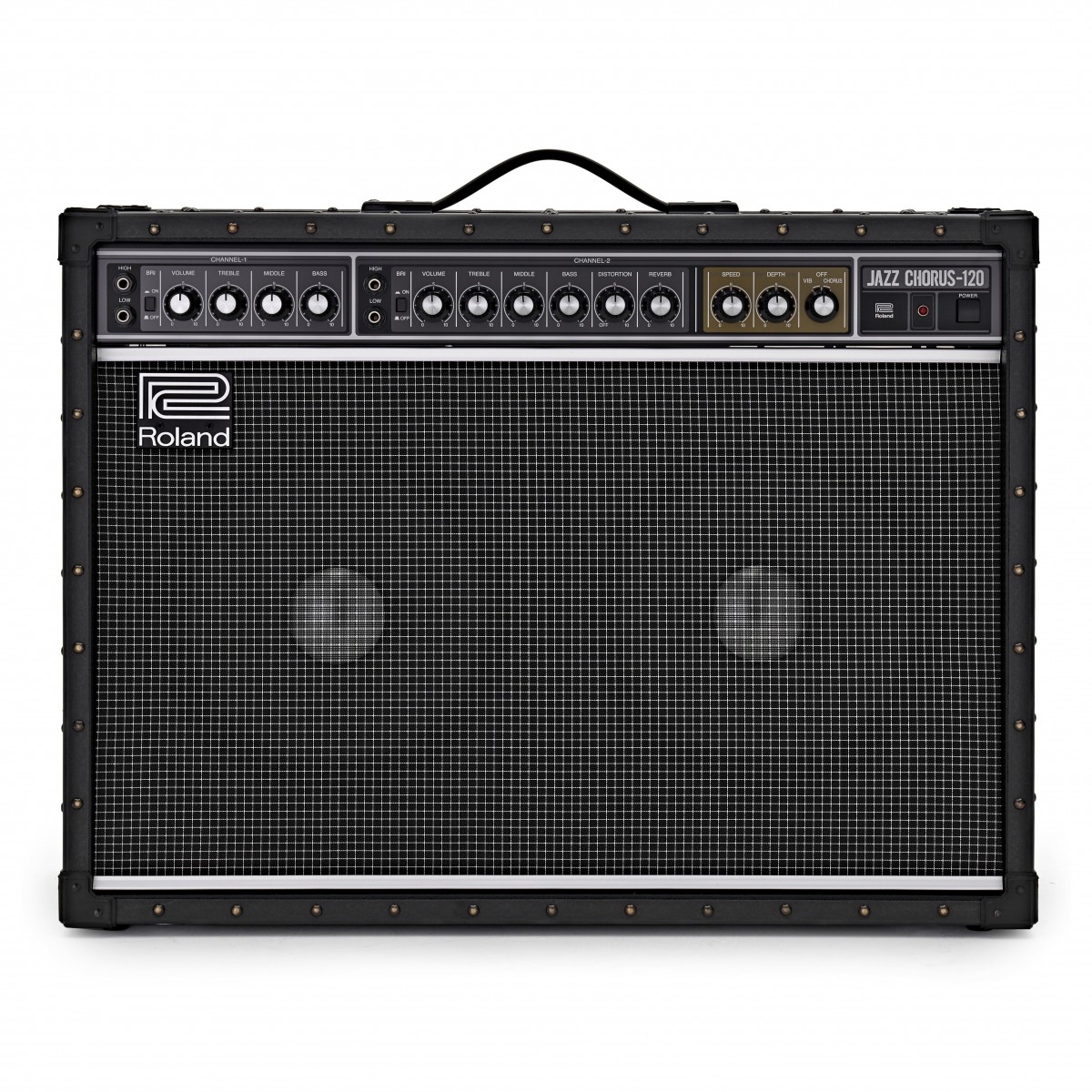
Overview of the Logarithmic Relationship
A common misconception among musicians is that a 100-watt amplifier will be twice as loud as a 50-watt amplifier. In reality, human hearing perceives sound intensity on a logarithmic scale. To achieve a sound that is perceived as 'twice as loud,' an amplifier requires ten times the wattage. Consequently, a 100-watt amplifier is only about 3dB louder than a 50-watt model, which is an increase often described as 'noticeable' but far from double the volume.
The Role of Decibels (dB)
Decibels are the standard unit for measuring sound pressure level (SPL). In the context of amplification:
- +1dB: The smallest change in volume detectable by the human ear under ideal conditions.
- +3dB: A noticeable change produced by doubling the amplifier's wattage.
- +10dB: A perceived doubling of volume, requiring a tenfold increase in wattage.
Understanding these increments helps musicians choose gear based on their specific needs for stage volume versus weight and cost.
Speaker Sensitivity and Efficiency
The wattage of an amplifier is only one part of the loudness equation; speaker efficiency is arguably more critical. Speaker sensitivity is measured in decibels at one watt of power from one metre away (e.g., 97dB @ 1W/1m). A highly efficient speaker (100dB sensitivity) paired with a 50-watt amp will often sound louder than an inefficient speaker (95dB sensitivity) paired with a 100-watt amp. Therefore, upgrading speakers is often a more effective way to increase volume than upgrading to a higher-wattage amplifier.
Headroom and Clean Signal
Higher wattage does carry practical benefits beyond sheer volume, most notably 'headroom.' Headroom refers to the amount of power an amplifier has available before it begins to distort the signal. A 100-watt amplifier allows a guitarist to play at high volumes while maintaining a 'clean' tone, whereas a 15-watt amplifier will likely enter power-amp distortion (breakup) at much lower volume levels. This is why jazz players often prefer high-wattage solid-state or tube amps, while rock players may prefer low-wattage amps that distort at manageable volumes.
Tube vs Solid-State Perception
Musicians often argue that a 30-watt tube amplifier sounds louder than a 30-watt solid-state amplifier. This is generally due to how the different technologies clip the signal. When a tube amp reaches its wattage limit, it compresses and distorts in a musically pleasing way, allowing the player to push the volume further. Solid-state amps often feature harsh clipping when pushed, leading manufacturers to design them with higher wattage ratings to ensure they stay within their clean operating range.
Frequently asked questions
- Is a 100W amp twice as loud as a 50W amp?
- No. A 100W amp is only approximately 3dB louder than a 50W amp, which is a noticeable but small increase. To double the volume, you would need 500W.
- What is required to double the perceived volume of an amp?
- Perceived doubling of volume (a 10dB increase) requires ten times the wattage. For example, moving from a 5W amp to a 50W amp results in a doubling of perceived loudness.
- Why do low wattage amps sometimes sound very loud?
- Loudness is heavily influenced by speaker sensitivity. A 5W amp driving a 4x12 cabinet with high-efficiency speakers can produce significant volume, often exceeding a higher-wattage amp with a single small, inefficient speaker.
- What does speaker sensitivity mean?
- It is a measurement of how much sound a speaker produces with a standard amount of power. It is usually expressed as decibels (dB) produced with 1 Watt of power measured at a distance of 1 metre.
- How much louder is a 100W amp compared to a 10W amp?
- A 100W amp is roughly twice as loud (+10dB) as a 10W amp, assuming all other factors like speakers and cabinet design remain the same.
- Does a higher wattage amplifier always sound better?
- Not necessarily. Higher wattage provides more 'headroom,' meaning the sound stays clean at higher volumes. If you want natural power-tube distortion at lower volumes, a lower-wattage amp is often more desirable.
- What is 'headroom' in an amplifier?
- Headroom is the amount of power available before the amplifier's signal begins to distort or 'clip.' High wattage is essential for players who need a crystal-clean sound at high stage volumes.
- Why do tube amps seem louder than solid-state amps of the same wattage?
- Tube amps clip more softly and musically, allowing players to push them past their rated power. Solid-state amps are usually designed to stay clean, and their maximum usable volume is often strictly limited by harsh clipping.
- How many decibels is a 5W amp through a typical speaker?
- A 5W amp into a speaker with 95dB sensitivity will produce roughly 102dB at full power. This is significantly louder than a typical vacuum cleaner and can cause hearing damage over time.
- Can I make my amp louder without buying a new one?
- Yes, by replacing the speakers with higher-sensitivity models. Replacing a 95dB speaker with a 101dB speaker has the same effect on volume as quadrupling your amplifier's wattage.
- Is a 50W tube amp enough for a loud drummer?
- Generally, yes. A 50W tube amp provides enough volume and headroom for most club-sized venues, though clean headroom may be limited depending on the specific amp design and speakers.
- Why is the volume knob on my amp not linear?
- Most volume potentiometers are 'logarithmic' or 'audio taper' because our ears perceive sound logarithmically. This allows for a more natural-feeling control over the volume range.