Glossary
Weighted Keys (Piano Action)
Weighted keys are a type of keyboard action designed to replicate the physical resistance and mechanical feel of an acoustic piano. This mechanism allows musicians to control dynamic expression through touch, bridging the gap between electronic instruments and traditional hammers and strings.
Overview
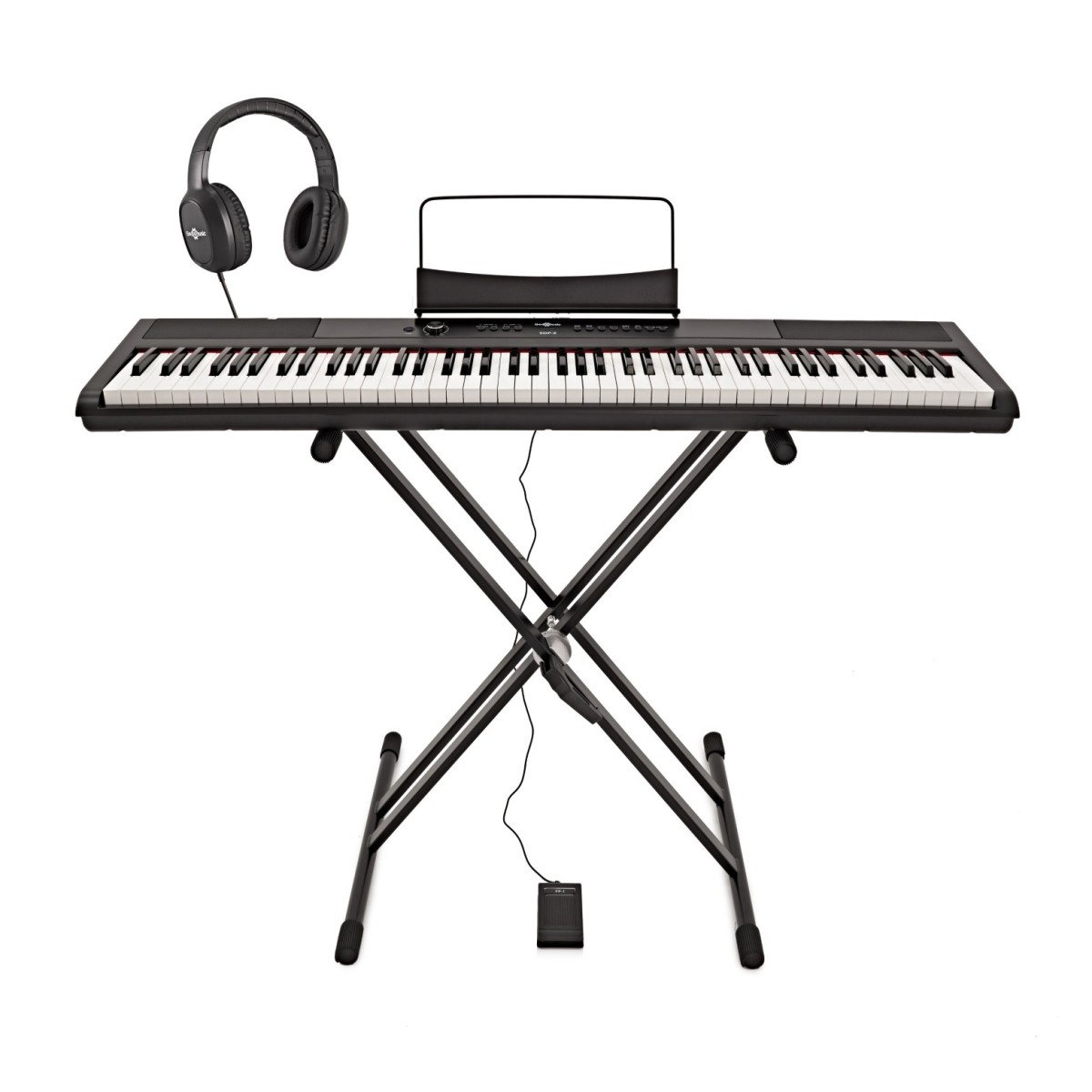
Weighted keys, often referred to as 'hammer action,' are a fundamental feature in digital pianos and high-end MIDI controllers. Unlike the spring-loaded keys found on basic synthesisers and portable keyboards, weighted keys use physical mass—and often a cantilever system—to provide resistance. This design ensures that the player must exert a specific amount of force to move the key, mirroring the inertia felt when a wooden hammer strikes a string in an acoustic piano.
Why Weight Matters
The primary purpose of weighted keys is to facilitate dynamic expression. In an acoustic piano, the speed at which a hammer strikes the string determines the volume and timbre of the note. For a pianist, the resistance of the key is the primary feedback mechanism used to judge that speed.
Without this weight, a player may find it difficult to play softly (*pianissimo*) or execute consistent crescendos. Furthermore, practicing on weighted keys builds the necessary hand strength and dexterity required for professional classical and jazz performance.
Types of Weighted Action
There are several categories of weighted keys encountered in modern gear:
- Fully Weighted / Hammer Action: These use a mechanical lever system with actual weights to simulate the hammer strike.
- Graded Hammer Action: An advancement where the keys in the lower register feel heavier than those in the higher register, exactly like an acoustic grand piano.
- Semi-weighted: These use springs combined with small weights. They provide more resistance than a synthesiser but lack the realistic inertia of a hammer action.
- Wooden Keys: High-end models may feature long-pivot wooden keys to further enhance the tactile authenticity.
Practical Implications for Buyers
When selecting a keyboard, the choice of action should align with the player's goals. If the instrument is intended for piano study or formal exams, a fully weighted, graded hammer action is generally considered mandatory. If the user primarily plays organ or synthesiser parts—which involve fast 'glissandos' and rapid repetitive triggers—fully weighted keys may actually be a hindrance, as they can cause hand fatigue during non-piano performance techniques.
Frequently asked questions
- What is the difference between weighted and semi-weighted keys?
- Weighted keys use mechanical mass to simulate a piano’s hammer resistance, whereas semi-weighted keys use a combination of springs and light weights for a compromise between synth and piano feel.
- Do weighted keys make the keyboard more expensive?
- Yes, generally. The mechanical complexity of levers, weights, and high-quality sensors required for weighted action adds significantly to the manufacturing cost and weight of the instrument.
- What does 'Graded' or 'Progressive' hammer action mean?
- In an acoustic piano, hammers for bass notes are larger and heavier than those for treble notes. Graded action replicates this by making the left-hand keys feel slightly heavier than the right-hand keys.
- Are weighted keys better for beginners?
- If the beginner intends to learn piano, yes. Weighted keys help develop the finger strength and control needed to transition to a real acoustic piano eventually.
- Can you play fast on weighted keys?
- Yes, but it requires more finger strength and technique. Many professional pianists prefer the control weighted keys offer for fast passages, though synth players may find them sluggish for certain styles.
- Do all 88-key keyboards have weighted keys?
- No, while most 88-key instruments do, there are 'lightweight' 88-key controllers and workstations designed for portability that use semi-weighted or synth-action keys.
- Does 'velocity sensitive' mean the same thing as 'weighted'?
- No. Velocity sensitivity is an electronic feature that detects how hard you hit a key to change volume. Weighted refers to the physical mechanical resistance of the key itself.
- How heavy is a keyboard with weighted keys?
- Instruments with fully weighted actions are significantly heavier, often weighing between 12kg and 30kg, making them more difficult to transport than non-weighted alternatives.
- What are 'aftertouch' sensors in the context of weighted keys?
- Aftertouch allows players to change the sound by applying pressure *after* the key is struck. It is found on some weighted MIDI controllers but is rarely found on traditional digital pianos.
- Which is more durable, weighted or unweighted?
- Weighted actions are robust but involve more moving parts. Over many years, the grease may dry up or the felt buffers may wear down, requiring maintenance that synth-action keys rarely need.
- Can weighted keys cause hand fatigue?
- Yes, if a player is not used to the resistance or if their technique is poor, playing on a heavy weighted action for long periods can lead to fatigue.
- Are there different levels of quality in weighted actions?
- Definitely. High-end actions feature longer pivots, wooden materials, and triple-sensor arrays for better repetition, while entry-level weighted keys may feel 'mushy' or 'bouncy'.