
Glossary
XLR vs 1/4-inch Jack Connectors
XLR and 1/4-inch jack connectors are the two most common standards for transmitting audio signals between instruments, microphones, and sound reinforcement equipment. While they share similarities in signal delivery, they differ fundamentally in their wiring architecture, signal levels, and mechanical reliability.
Overview
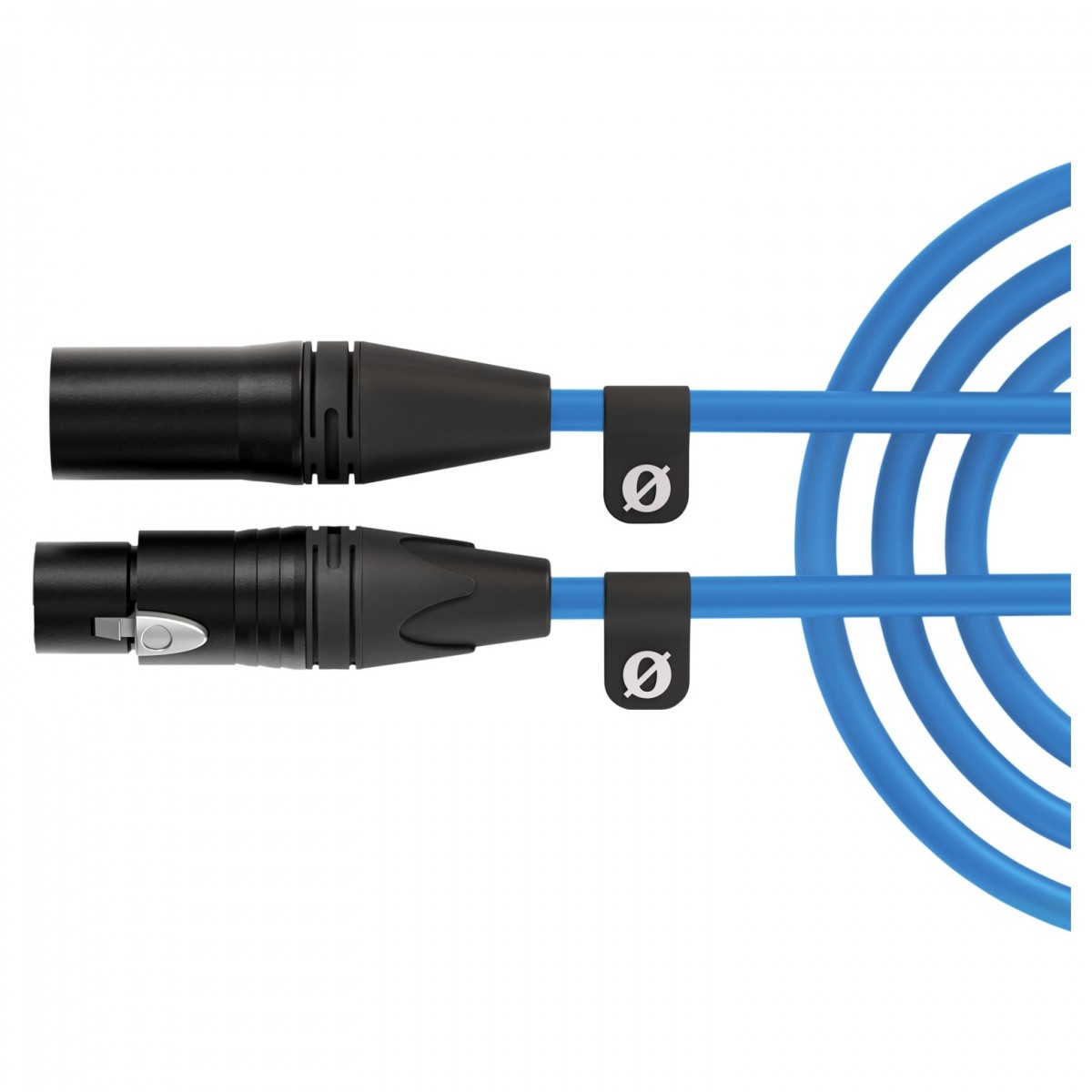
The primary distinction between these two connectors lies in their physical construction and their ability to carry balanced audio. An XLR connector is a circular plug with three pins, typically used for microphones and professional line-level signals. The 1/4-inch jack, also known as a phone plug, comes in two main varieties: TS (Tip-Sleeve) and TRS (Tip-Ring-Sleeve).
While both can carry audio, XLR is almost exclusively used for balanced signals, whereas 1/4-inch cables are used for both unbalanced instrument signals (TS) and balanced line signals (TRS). The choice between them is usually dictated by the output of the source equipment and the noise requirements of the environment.
Balanced vs Unbalanced Signals
Understanding these connectors requires an understanding of signal balancing:
- Balanced (XLR and TRS): Uses three conductors—a positive, a negative, and a ground. By phase-flipping the signal and recombining it at the destination, balanced connections cancel out electromagnetic interference and hum picked up along the cable run. This allows for very long cable lengths without signal degradation.
- Unbalanced (TS): Uses only two conductors. Because there is no phase cancellation, these cables are susceptible to noise and are generally limited to lengths of less than 6 metres (20 feet).
Applications and Usage
XLR connectors are the industry standard for microphone connections. They provide the necessary ground path for +48V phantom power, which is required by condenser microphones. Due to their locking mechanism, they are preferred for stage environments where cables might be tugged or moved.
1/4-inch TS jacks are the standard for electric guitars, basses, and synthesizers. These instruments typically output a high-impedance, unbalanced signal. 1/4-inch TRS jacks are frequently used for headphones, mono balanced line-level signals, and 'insert' points on mixing consoles.
Durability and Mechanics
XLR connectors feature a push-button locking mechanism that prevents the cable from being accidentally disconnected. The pins are also protected by a metal housing, making them highly resilient for touring.
In contrast, 1/4-inch jacks rely on friction to stay in place. While this makes them faster to plug and unplug, they are more prone to slipping out if the cable is stepped on. Additionally, 1/4-inch jacks can momentarily short-circuit when being plugged in, which is why it is best practice to turn down volume levels before connecting them.
Frequently asked questions
- Can I plug a guitar directly into an XLR microphone input?
- Not directly without a DI box. Guitars output a high-impedance signal that is incompatible with the low-impedance mic preamps usually found behind XLR inputs, and the physical connectors are different.
- What is the difference between TS and TRS 1/4-inch cables?
- TS (Tip-Sleeve) cables have one insulating ring and are unbalanced, while TRS (Tip-Ring-Sleeve) cables have two insulating rings and can carry balanced mono signals or unbalanced stereo signals.
- Is XLR always better than 1/4-inch?
- Not necessarily, but it is better for long distances and low-noise requirements. For short runs of high-impedance instruments like electric guitars, the 1/4-inch TS cable is the appropriate standard.
- Does a 1/4-inch TRS cable work for mono balanced audio?
- Yes, when plugged into a balanced jack, a TRS cable functions similarly to an XLR cable by carrying a positive, negative, and ground signal to eliminate noise.
- Why do microphones use XLR instead of jacks?
- Microphones produce very low-level signals that are sensitive to noise, so they require the balanced connection of XLR. XLR also reliably provides phantom power to condenser microphones.
- Can I use an XLR to 1/4-inch adapter?
- Yes, but you must be aware of signal levels and balancing. An adapter may convert a balanced XLR signal to an unbalanced 1/4-inch TS signal, potentially introducing noise or losing signal strength.
- What is 'phantom power' in the context of XLR?
- Phantom power (+48V) is a DC voltage sent through the XLR cable to power the circuitry of condenser microphones and active DI boxes.
- Can a 1/4-inch cable carry phantom power?
- While technically possible in custom setups, it is not a standard practice. Using phantom power through 1/4-inch jacks is dangerous because the connector shorts out during insertion, which can damage gear.
- Which connector is more durable for live performance?
- The XLR is significantly more durable for live use because of its locking mechanism and enclosed pins, which protect against physical damage and accidental disconnection.
- Does the length of the cable matter for these connectors?
- For unbalanced 1/4-inch TS cables, quality drops and noise increases after about 6 metres. Balanced XLR or TRS cables can run 50 metres or more without significant signal loss or noise.
- Are all 3-pin circular connectors XLR?
- While the 3-pin XLR is the audio standard, there are other circular connectors that look similar. Professional audio equipment almost exclusively uses the Cannon-style XLR-3 standard.
- What happens if I use a TRS cable for a guitar?
- It will function as a standard TS cable in most cases, but it provides no benefit. In some active guitars with battery-switched jacks, a TRS cable may prevent the instrument from turning on.