Article
Duane Allman's gear: the instruments behind their career
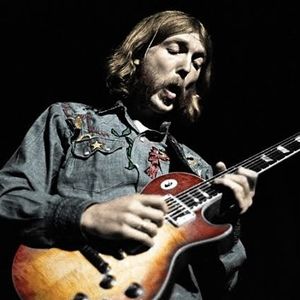
Duane Allman was a pivotal figure in Southern Rock and Blues, defined by a searing slide guitar technique and melodic improvisation. His tone was anchored by vintage humbucker-equipped guitars and powerful tube amplification, facilitating his transition from a prolific session musician to a legendary bandleader.
Early Career and Session Work
Before the formation of the Allman Brothers Band, Duane Allman established himself as a premier session guitarist, contributing to iconic recordings by Aretha Franklin and Wilson Pickett. During his formative years, he utilised instruments like the Fender Telecaster (1956) and the Gibson Les Paul Junior Double-Cutaway (1958-1961). These guitars provided the sharp, biting clarity required for Soul and R&B sessions, allowing his lead lines to cut through complex arrangements.
Signature Guitars and Slide Technique
As he moved into the Southern Rock and Jam genres, Allman became synonymous with the Gibson sound. He frequently performed with a Gibson Les Paul Goldtop (1957), a guitar that provided the thick, sustaining tone essential for his melodic improvisations. Additionally, he was often seen with a Gibson Les Paul (SG) Standard with Sideways Vibrola 1961 - 1962, an instrument known for its ease of access to higher frets, which complemented his fluid slide work. For his work in Folk and World contexts, or when pursuing a specific acoustic resonance, he employed a Regal Company Chicago Dobro (1930).
Amplification and Studio Tone
To achieve his famed 'woman tone' and high-volume grit, Allman relied on classic valve amplification. In live settings, the Marshall 1969 Super Bass provided a robust low-end foundation and the headroom necessary for long, improvisational sets. For studio work and smaller sessions, he utilised the Fender Deluxe Reverb-Amp Original Issue (1963-1981) and the compact Fender '57 Champ. These smaller amps allowed for natural power-tube saturation at lower volumes, a technique notably used during his collaborations with Eric Clapton.
Final Years and Versatility
In the period leading up to 1971, Allman's gear choice reflected his technical versatility across Jazz and Blues. The Gibson ES-345 (1959) offered a semi-hollow resonance and a varied tonal palette that suited the Allman Brothers Band’s expanding musical scope. Whether using the Gibson Les Paul (SG) Standard with Sideways Vibrola (1961-1962) for aggressive rock passages or his various Les Paul models for soulful blues, his equipment was central to his identity as an influential American guitarist.
Artists who have used this item
Frequently asked questions
- What guitar did Duane Allman use for his early session work?
- He used a **Fender Telecaster (1956)** and a **Gibson Les Paul Junior Double-Cutaway (1958-1961)** during his time as a session musician.
- Which Marshall amplifier was part of Duane Allman's rig?
- He used a **Marshall 1969 Super Bass** for his live performances.
- Did Duane Allman play any acoustic or resonator guitars?
- Yes, he played a **Regal Company Chicago Dobro (1930)**.
- What year did Duane Allman's career end?
- Duane Allman was active until 1971.
- Which Gibson model with a vibrola did he play?
- He played a **Gibson Les Paul (SG) Standard with Sideways Vibrola 1961 - 1962**.
- What Fender amps were in his collection?
- His collection included a **Fender Deluxe Reverb-Amp Original Issue (1963-1981)** and a **Fender '57 Champ**.
- Which specific Goldtop model is associated with Duane Allman?
- He is well known for playing a **Gibson Les Paul Goldtop (1957)**.
- Did Duane Allman ever use a semi-hollow guitar?
- Yes, he used a **Gibson ES-345 (1959)**.
- Which artists did Duane Allman record with as a session musician?
- He recorded with Eric Clapton, Wilson Pickett, and Aretha Franklin, among others.
- What genres was Duane Allman known for?
- His work spanned Rock, Blues, Funk / Soul, Jazz, Folk, World, & Country, Jam, Soul, and Southern Rock.
Last updated: